
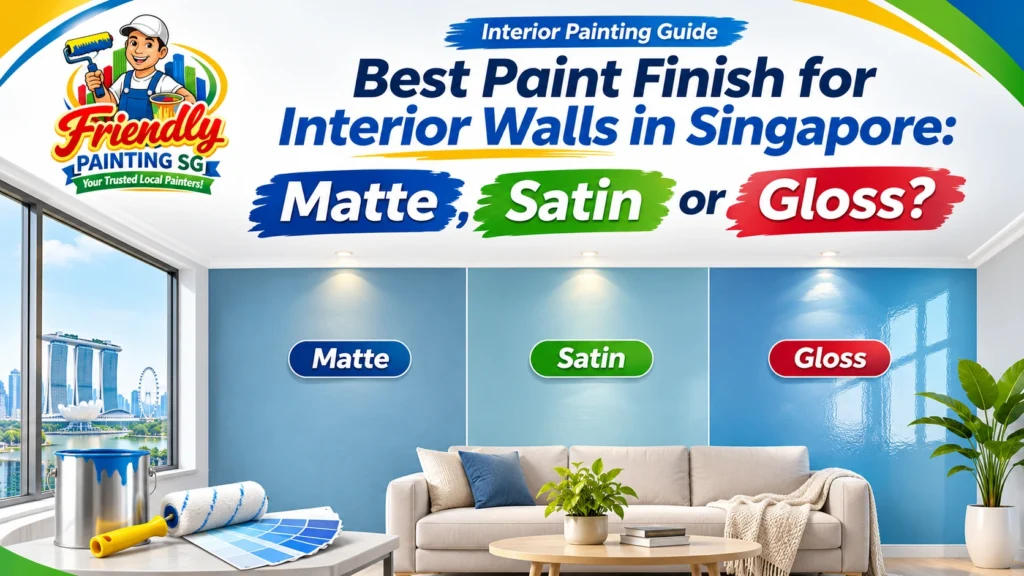
Choosing the right paint finish can completely change how your home looks, feels, and performs over time. However, with so many interior wall paint options available, deciding between matte, satin, and gloss can be confusing, especially for homeowners in Singapore.
Singapore’s warm, humid climate, compact HDB layouts, and different household lifestyles make paint selection more important than simply choosing an attractive colour. Some finishes conceal wall imperfections beautifully, while others offer easier cleaning and better resistance to everyday marks.
So, what is the best paint finish for walls Singapore homeowners should consider?
For most living rooms and bedrooms, a high-quality matte or washable matte finish is an excellent choice because it creates a soft appearance and minimises visible wall imperfections. Meanwhile, satin and other low-to-medium sheen finishes suit areas requiring frequent cleaning. Gloss finishes are generally better for doors, trims, and selected decorative surfaces rather than entire interior walls.
This guide compares each finish, explains its advantages and limitations, and helps you select the most suitable option for your Singapore home.
1. What Are the Different Types of Interior Wall Paint Finishes?
A paint finish describes the amount of light reflected by a painted surface. This characteristic, commonly called sheen, influences a wall’s appearance, how noticeable its imperfections are, and how easy it is to maintain.
Although colour determines the overall atmosphere of a room, the finish affects how that colour appears under different lighting conditions.
Understanding Paint Sheen and How It Affects Interior Walls
Paint sheen generally ranges from flat or matte to high gloss.
Low-sheen finishes absorb and scatter more light, producing a softer appearance. In contrast, glossy finishes reflect more light, creating a noticeable shine.
However, sheen alone does not determine paint quality. Modern paint formulations can provide excellent washability even with a matte appearance.
What Is Matte Paint Finish?
Matte paint has little visible shine and produces a smooth, understated appearance.
It is commonly selected for bedrooms, living rooms, ceilings, and other interior spaces where homeowners prefer a calm atmosphere.
One major advantage of matte paint is its ability to reduce the visibility of minor wall imperfections, including uneven plaster, small repairs, and subtle surface irregularities.
Traditional matte finishes may be more sensitive to repeated scrubbing. Nevertheless, premium washable matte products offer improved cleaning performance.
What Is Satin Paint Finish?
Satin paint has a gentle, noticeable sheen that falls between matte and gloss.
Its surface reflects more light than matte paint, creating a subtle polished effect without the strong shine associated with gloss.
Many satin formulations offer good stain resistance and washability, making them useful in busy households.
However, the term satin is not applied identically across all manufacturers. Therefore, homeowners should check whether the selected product is formulated for interior masonry walls, woodwork, or another surface.
What Is Gloss Paint Finish?
Gloss paint produces a shiny, reflective surface.
It is commonly used on doors, window frames, skirting boards, furniture, and decorative architectural details.
The reflective finish can create an attractive contrast against matte walls. However, it also makes uneven surfaces, roller marks, and preparation defects more noticeable.
For this reason, high-gloss paint is generally less suitable for covering large interior walls.
Are Eggshell and Semi-Gloss Finishes Different From Matte and Satin?
Yes. Eggshell usually has a subtle sheen above flat or matte, while semi-gloss is more reflective than satin.
Eggshell can provide a useful compromise for homeowners who want a soft appearance with some cleaning capability.
Semi-gloss, meanwhile, is often chosen for selected surfaces requiring more frequent wiping.
The precise sheen level varies between manufacturers, so comparing physical samples is more reliable than relying on finish names alone.
How Paint Sheen Changes Light Reflection and Wall Appearance
Natural daylight, ceiling lights, and directional lighting can make the same paint appear different throughout the day.
For example, a glossy wall near a large window may produce noticeable reflections. Matte paint generally reduces this effect.
Why Paint Finish Matters for Cleaning and Maintenance
The finish affects how easily marks can be removed. However, formulation, curing time, cleaning products, and surface preparation are equally important.
A washable matte product may outperform a basic satin paint in some cleaning situations. Therefore, homeowners should evaluate actual product specifications rather than assuming that shinier always means better.
2. Matte vs Satin vs Gloss Paint: Key Differences Explained
Understanding the differences between these finishes helps homeowners select paint based on practical needs rather than appearance alone.
Paint sheen influences appearance, cleaning requirements, and the visibility of wall imperfections. According to Dulux Singapore’s guidance on choosing the right paint finish, matte finishes are particularly suitable for interior walls, while low-sheen options provide practical washability and gloss is commonly used on woodwork and decorative details.
Matte vs Satin Paint: Which Is Better for Interior Walls?
Matte paint is particularly effective at creating a soft, modern appearance. It also conceals minor imperfections better than more reflective finishes.
Satin paint, meanwhile, introduces gentle shine and can offer easier maintenance, depending on the formulation.
For bedrooms and relatively low-contact living spaces, matte is often preferred. For corridors, family areas, and walls frequently touched or cleaned, a suitable washable satin or matte product may be more practical.
Satin vs Gloss Paint: Which Finish Is Easier to Maintain?
Gloss surfaces are often easier to wipe because of their smoother, more reflective finish.
However, satin provides a useful balance between appearance and practicality. It generally attracts less attention to surface defects than high gloss.
Consequently, satin is often a better option for larger painted surfaces when additional washability is desired.
Matte vs Gloss Paint: Which Looks Better in Singapore Homes?
Neither finish is universally better.
Matte works particularly well with minimalist, Scandinavian-inspired, contemporary, and warm neutral interiors.
Gloss can complement decorative features, traditional woodwork, and selected modern design accents.
For typical HDB and condominium living spaces, matte or low-sheen walls often provide a more balanced appearance than high gloss.
Paint Finish Comparison: Durability, Washability, Moisture Resistance and Appearance
| Feature | Matte | Satin | Gloss |
|---|---|---|---|
| Appearance | Soft, understated | Gentle sheen | Highly reflective |
| Light reflection | Low | Moderate | High |
| Hides imperfections | Very good | Moderate | Poor |
| Ease of cleaning | Varies by formulation | Generally good | Generally very good |
| Moisture suitability | Requires suitable formulation | Often suitable with correct formulation | Surface and product dependent |
| Living rooms | Excellent | Good | Less common |
| Bedrooms | Excellent | Good | Less common |
| Kitchens | Washable matte | Suitable washable formulation | Selected surfaces |
| Doors and trims | Less common | Excellent with suitable trim paint | Excellent |
| Maintenance | Gentle cleaning | Regular gentle wiping | Easy wiping, but imperfections remain visible |
Key takeaway: For most Singapore interior walls, quality matte and low-to-medium sheen finishes provide the most useful balance of appearance, comfort, and maintenance.
Which Finish Hides Wall Imperfections Best?
Matte is generally the best option for concealing minor imperfections because it reflects less light.
Which Finish Is Easier to Clean?
Gloss is traditionally the easiest to wipe. However, specially formulated washable matte and satin paints can also offer strong cleaning performance.
Which Finish Performs Better in High-Traffic Areas?
A stain-resistant, washable interior paint is often more important than selecting a particular sheen.
Which Finish Reflects More Natural and Artificial Light?
Gloss reflects the most light, followed by satin and matte. However, greater reflectivity does not necessarily make a room more comfortable or visually spacious.
3. Is Matte Paint a Good Choice for Interior Walls in Singapore?
Matte remains one of the most practical choices for residential interiors because it creates a consistent, elegant appearance across large wall surfaces.
It is particularly attractive in modern Singapore homes where understated finishes and neutral colours are popular design choices.
Benefits of Matte Paint for Bedrooms and Living Rooms
Matte paint provides several advantages.
First, its low-reflection appearance creates a comfortable visual environment, particularly in rooms receiving strong daylight.
Second, it conceals minor surface imperfections, making walls appear smoother.
Third, matte paint complements a wide variety of furniture, flooring materials, and decorative styles.
In addition, touch-ups may be less noticeable with certain matte formulations, although results depend on colour, application technique, and paint condition.
Disadvantages of Matte Paint in Busy Households
Basic matte products may develop visible marks when repeatedly rubbed or scrubbed.
This can become problematic in homes with young children, pets, or heavily used corridors.
Furthermore, some traditional matte finishes are more vulnerable to stains than higher-performance alternatives.
Nevertheless, these limitations should not be applied to every matte product. Many modern formulations are specifically designed for washability.
When Should You Choose Washable Matte Paint?
Washable matte is especially suitable when you want a low-sheen appearance without sacrificing practical maintenance.
For instance, it can work well in family living rooms, bedrooms, study areas, and selected hallways.
When comparing products, examine their stated stain resistance, washability, suitability for masonry surfaces, and recommended cleaning methods.
Matte Paint for Uneven or Previously Repaired Walls
Walls with minor patching or uneven plaster often benefit from matte paint because reflections are less noticeable.
However, paint cannot properly conceal significant cracks, raised filler, moisture damage, or poorly prepared surfaces.
Those problems require corrective preparation before painting.
How to Maintain Matte Interior Walls Without Damaging the Finish
Use a soft microfibre cloth, gentle cleaning solution where permitted, and minimal pressure.
Always test the cleaning method in an inconspicuous area.
Avoid aggressive scrubbing or abrasive materials, especially on newly painted surfaces.
4. Is Satin Paint the Best Balance Between Appearance and Durability?
Satin is frequently considered a practical middle ground between matte and gloss.
It offers a slightly polished appearance while remaining less reflective than high-gloss coatings.
However, the suitability of satin depends on the particular paint product and whether it is designed for interior walls.
Why Satin Paint Works Well for Frequently Used Spaces
Frequently used spaces experience more contact, accidental marks, and cleaning.
Suitable satin wall paints can provide a finish that tolerates gentle wiping and maintains an attractive appearance.
As a result, satin may be useful for family rooms, dining areas, and corridors.
Benefits of Satin Paint for Cleaning and Stain Resistance
Many satin products provide better resistance to routine stains than basic flat paints.
Their smoother surface may make it easier to remove fingerprints and everyday marks.
This can reduce maintenance effort in households where walls require regular attention.
However, always check the manufacturer’s washability claims rather than treating every satin product as equally durable.
Drawbacks of Satin Paint on Imperfect Walls
Satin reflects more light than matte, making surface unevenness easier to notice.
Patch repairs, sanding marks, and inconsistent roller application can become more apparent under directional lighting.
Consequently, careful preparation is particularly important.
When to Choose Satin Instead of Matte
Choose an appropriate satin wall paint when regular cleaning is a priority and the walls are sufficiently smooth.
If the room has significant surface imperfections or strong direct lighting, washable matte may provide a better visual result.
How Lighting Affects Satin Paint’s Appearance
Satin finishes may appear relatively subtle under diffused lighting but more reflective near windows and bright artificial lights.
Testing a sample under morning, afternoon, and evening conditions can prevent disappointment.
5. Should You Use Gloss Paint on Interior Walls?
Gloss paint offers strong visual impact, but it is not automatically the best solution for every room.
Its reflective finish can highlight decorative elements beautifully. Nevertheless, covering entire walls with high gloss requires more careful design and surface preparation.
Advantages of Gloss Paint for Selected Interior Surfaces
Gloss finishes can create a clean, polished appearance.
They are particularly useful for doors, skirting boards, frames, and other surfaces requiring a distinct finish.
Suitable gloss formulations can also withstand regular wiping.
Why High-Gloss Paint Is Less Common on Large Interior Walls
High gloss makes imperfections more visible.
Moreover, reflections from large windows, ceiling lights, or lamps can create glare.
In compact rooms, these reflections may become distracting rather than visually appealing.
Best Places to Use Gloss Paint in Singapore Homes
Gloss is often appropriate for interior doors, window frames, decorative woodwork, and selected feature details.
For main masonry walls, a less reflective finish is generally easier to integrate into everyday residential design.
Gloss Paint for Doors, Frames and Skirting Boards
These areas frequently experience physical contact and cleaning.
Using compatible gloss or semi-gloss trim paint can create a useful contrast against matte walls.
Surface Preparation Needed Before Applying Gloss Paint
Gloss requires a smooth, properly prepared base.
Sanding, filling, cleaning, priming, and applying thin, consistent coats are important for reducing visible imperfections.
Also ensure that the product is formulated for the specific surface, whether wood, metal, or masonry.
6. Best Paint Finish for Every Room in a Singapore Home
Different rooms place different demands on painted walls.
Therefore, the most effective approach is to choose finishes according to daily activities, cleaning requirements, lighting, and moisture exposure.
Best Paint Finish for Living Room Walls
Living rooms benefit from a comfortable, balanced appearance.
A quality matte or washable matte finish is an excellent starting point, particularly for neutral colours and walls receiving considerable daylight.
For busier family spaces, a suitable low-sheen washable coating provides another practical option.
Best Paint Finish for Bedroom Walls
Matte or eggshell finishes are commonly suitable for bedrooms.
They create a soft visual effect and reduce distracting reflections from lamps and windows.
For children’s bedrooms, selecting a washable formulation may be especially beneficial.
Best Paint Finish for Kitchen Walls
Kitchen walls may experience grease, steam, splashes, and frequent wiping.
Accordingly, choose an interior wall paint specifically designed for stain resistance and cleaning.
Washable satin, low-sheen, or high-performance matte formulations may be suitable depending on the product.
For areas exposed directly to cooking splashes or high heat, use an appropriate protective surface rather than relying on ordinary wall paint.
Best Paint Finish for Bathroom Walls
Bathrooms require special consideration because of persistent moisture.
For suitable non-tiled wall areas, select a coating explicitly approved for humid interiors.
Satin or semi-gloss finishes are sometimes used, but an appropriate moisture-resistant matte formulation may also be suitable.
Importantly, ordinary paint should not replace waterproofing systems or finishes required in direct wet zones.
Best Paint Finish for Children’s Rooms
Children’s rooms often require frequent spot cleaning.
Therefore, washable matte or other durable, low-sheen wall paints can offer an excellent balance of appearance and practicality.
Low-odour and low-VOC options may also be worth considering, alongside adequate ventilation and proper curing.
Best Paint Finish for Hallways and Corridors
Hallways experience more accidental contact than many other rooms.
A washable satin or premium matte product can help maintain a clean appearance.
If the corridor has uneven walls or strong lighting, washable matte may be especially useful.
Best Paint Finish for Ceilings
Matte and flat finishes are generally preferred for ceilings because they minimise unwanted reflections.
For bathrooms and other moisture-prone areas, choose a ceiling coating designed for those conditions.
Room-by-Room Paint Finish Recommendations
| Room | Suggested Finish | Main Consideration |
|---|---|---|
| Living room | Matte or washable matte | Appearance and low glare |
| Master bedroom | Matte or eggshell | Soft visual effect |
| Children’s bedroom | Washable matte or low sheen | Stain removal |
| Kitchen | Washable satin or suitable matte | Grease and cleaning |
| Bathroom | Moisture-rated coating | Humidity and ventilation |
| Hallway | Washable matte or satin | Frequent contact |
| Ceiling | Flat or matte | Reduced reflections |
| Doors and trims | Satin, semi-gloss or gloss | Surface durability |
These recommendations are starting points, not universal rules. Product specifications should always guide the final selection.
Choosing Paint Finishes for Small HDB Rooms
Matte and low-sheen finishes can create a visually consistent appearance across compact rooms.
However, colour, lighting, furniture placement, and room proportions have a greater effect on perceived spaciousness than sheen alone.
Choosing Paint Finishes for Open-Concept Condo Interiors
Open-plan interiors benefit from coordinated finishes.
Using a consistent matte or low-sheen coating across connected living and dining spaces can create visual continuity.
Matching Wall Finishes With Doors, Trims and Furniture
An effective design combination is matte walls with satin or semi-gloss doors and trims.
This introduces subtle contrast without making the entire room excessively reflective.
7. How Does Singapore’s Humid Climate Affect Interior Paint Finishes?
Singapore’s tropical environment creates important considerations for interior painting.
Humidity, ventilation, condensation, and underlying wall moisture can influence how coatings dry and perform.
However, selecting a glossy finish alone does not solve moisture-related problems.
Singapore’s humid environment makes choosing the correct paint formulation particularly important. Understanding the differences between interior and exterior paint helps homeowners avoid using unsuitable coatings on indoor walls. Interior paints are formulated for indoor applications, while exterior products are designed to withstand outdoor exposure.
How Humidity Affects Paint Durability and Wall Conditions
Persistently damp walls can experience peeling, blistering, staining, and mould growth.
Inadequate drying before painting may also interfere with adhesion.
Therefore, homeowners should check for leaks, condensation, and unresolved moisture before selecting a finish.
Can Matte, Satin or Gloss Paint Prevent Mould?
No paint sheen can independently prevent mould under all conditions.
Certain coatings contain additives designed to resist fungal growth, but their effectiveness depends on the formulation, correct application, and environmental conditions.
More importantly, persistent moisture must be controlled.
Painting over existing mould without treating the cause can allow the problem to return.
Choosing Washable and Mould-Resistant Interior Paint
For moisture-prone areas, look for products with clearly stated mould resistance, suitable substrate compatibility, and appropriate cleaning performance.
In addition, check whether the coating is intended for bathrooms, kitchens, or general interior walls.
Avoid assuming that every product labelled washable is suitable for constantly damp areas.
Why Ventilation and Surface Preparation Matter
Ventilation helps reduce moisture accumulation in enclosed spaces.
Meanwhile, proper surface preparation supports paint adhesion and long-term appearance.
Both are essential, regardless of whether the selected finish is matte, satin, or gloss.
Paint Considerations for Air-Conditioned Rooms
Air-conditioned rooms may experience condensation where cold surfaces meet humid air.
Maintain suitable ventilation, investigate recurring damp patches, and avoid painting over moisture problems.
Paint Considerations for Kitchens, Bathrooms and Damp Corners
Exhaust ventilation, leak repairs, and moisture control should come before decorative painting.
Where dampness persists, identify the underlying cause rather than repeatedly repainting the affected area.
8. How to Choose the Best Paint Finish for HDB Flats and Condominiums in Singapore
The ideal finish depends on how a home is used rather than simply whether it is an HDB flat, condominium, or landed property.
A busy family home may benefit from greater washability, while a quieter apartment may prioritise a subtle decorative appearance.
Best Interior Wall Paint Finish for HDB Flats
For many HDB living rooms and bedrooms, washable matte provides a practical combination of low glare and maintenance convenience.
Hallways and children’s rooms may benefit from coatings designed for more frequent cleaning.
Meanwhile, kitchens and bathrooms require products selected according to exposure to grease, steam, and moisture.
Best Paint Finish for Condominium Interiors
Condominium interiors often incorporate feature walls, decorative lighting, and large windows.
Matte finishes can reduce glare and support a cohesive appearance.
Satin or other sheen finishes may be introduced selectively to highlight architectural details.
Nevertheless, the correct choice depends on the desired design and daily maintenance requirements.
Choosing Paint Finishes for Landed Homes
Landed properties may contain larger rooms, staircases, and different lighting conditions.
Consequently, homeowners can use different finishes according to each area’s purpose.
For example, matte may suit large living spaces, while durable washable coatings may be preferable in stairwells and corridors.
Key Factors to Consider Before Making Your Decision
Wall Condition and Existing Paint
Inspect the walls for cracks, peeling, uneven plaster, and moisture damage.
A smooth surface provides greater flexibility when choosing reflective finishes.
Household Activities, Children and Pets
High-contact areas benefit from coatings that tolerate regular gentle cleaning.
Maintenance Preferences and Cleaning Frequency
Consider how often each room needs wiping and whether stain resistance is a priority.
Room Lighting and Interior Design Style
Test colours and finishes under the room’s actual lighting conditions.
Paint Quality and Available Budget
Compare coverage, preparation requirements, washability, recommended number of coats, and long-term maintenance rather than initial purchase price alone.
9. Common Mistakes to Avoid When Choosing Interior Wall Paint Finishes
Even high-quality interior paint can produce disappointing results when the wrong finish or application method is selected.
Choosing Gloss Paint for Large, Uneven Walls
Gloss can reveal surface defects that would be less visible under matte paint.
Therefore, either improve the surface preparation or choose a less reflective finish.
Using Basic Matte Paint in Areas Requiring Frequent Cleaning
Not all matte paints tolerate repeated scrubbing.
For high-contact areas, consider a washable matte or suitable low-sheen alternative.
Ignoring Moisture Problems Before Painting
Painting over damp surfaces can lead to blistering, peeling, and recurring stains.
Always investigate the source of moisture first.
Choosing Paint Based Only on Colour
A paint colour can look significantly different depending on sheen and lighting.
Compare sample finishes instead of relying exclusively on colour charts.
Skipping Proper Wall Preparation and Primer
Dust, grease, loose paint, and unstable surfaces can compromise adhesion.
Likewise, failing to use a suitable primer when required may affect the consistency and durability of the final coating.
10. How to Get a Long-Lasting Interior Paint Finish in Singapore
Selecting the correct finish is only one part of successful interior painting.
Application quality, substrate preparation, environmental conditions, and maintenance all influence how the completed walls perform.
Choosing the correct paint finish is only part of achieving attractive, durable walls. Professional interior painting services in Singapore can help homeowners select appropriate coatings, prepare wall surfaces, and achieve a consistent finish across bedrooms, living rooms, and other interior spaces.
Inspect and Prepare the Wall Surface
Before painting, examine the walls carefully.
Remove loose or peeling material, clean stains, repair suitable cracks, and investigate moisture damage.
After cleaning, allow the surface to dry thoroughly.
Select the Right Primer and Interior Paint
Choose a primer or sealer compatible with the substrate and topcoat.
New plaster, previously painted masonry, wood, and metal may require different products.
Follow the paint manufacturer’s recommendations rather than applying the same system to every surface.
Apply Paint According to Manufacturer Instructions
Use suitable brushes or rollers and maintain a consistent application technique.
Avoid excessively thick coats, which can produce uneven texture and drying problems.
In addition, follow the specified dilution and coverage requirements.
Allow Proper Drying and Recoating Time
Drying and recoating times vary according to product formulation, temperature, humidity, ventilation, and film thickness.
A surface that feels dry may not yet be ready for washing or heavy contact.
Therefore, distinguish between surface drying, recoating, and full curing.
Follow the Right Cleaning and Maintenance Practices
After the coating has cured, use the cleaning methods recommended for that product.
Promptly remove suitable stains with gentle techniques and avoid unnecessarily harsh chemicals.
Routine maintenance can help preserve colour consistency and appearance.
When Is Professional Interior Painting Worth Considering?
Professional assistance may be particularly useful for large homes, extensive surface repairs, difficult access areas, or rooms with recurring moisture concerns.
Experienced painters can also help homeowners compare finishes under actual lighting conditions and select appropriate coating systems.
What to Discuss With an Interior Painting Contractor
Before agreeing to a painting project, clarify the selected finish, product specifications, wall preparation, primer requirements, number of coats, expected drying conditions, and protection of furniture and flooring.
For homeowners considering an interior painting service in Singapore, a clearly defined scope of work makes it easier to compare quotations and understand what is included.
11. Final Verdict: Which Paint Finish Should You Choose for Your Singapore Home?
The best paint finish is the one that suits the wall’s condition, the room’s function, and the homeowner’s maintenance expectations.
No single sheen is ideal for every interior surface.
Choose Matte for a Soft, Low-Glare Finish
Matte is often the preferred choice for bedrooms, living rooms, and ceilings.
It provides an understated appearance and helps minimise minor surface imperfections.
For busy homes, a washable matte formulation offers added practicality.
Choose Satin for Areas Needing More Frequent Cleaning
Satin can be a suitable option for spaces where regular wiping and gentle sheen are desirable.
However, select a product specifically intended for the wall substrate and usage conditions.
Choose Gloss for Suitable Decorative Details and Trim
Gloss works particularly well on compatible doors, frames, and decorative surfaces.
For large interior walls, its stronger reflections and higher preparation demands make it less universally suitable.
Get Professional Help Choosing the Right Interior Wall Finish
Ultimately, homeowners comparing the best paint finish for walls Singapore properties can use should evaluate more than appearance.
Wall condition, moisture exposure, product quality, cleaning requirements, and proper preparation all contribute to successful results.
A well-chosen finish, combined with careful application, can create attractive interior walls that remain practical for everyday living.
12. Frequently Asked Questions About Interior Wall Paint Finishes in Singapore
1. What is the best paint finish for walls in Singapore?
For most living rooms and bedrooms, matte or washable matte is a strong choice because it offers a soft, low-glare appearance. Satin can suit frequently cleaned spaces, while gloss is generally better for selected trims and decorative features. The best option depends on the room, product formulation, and wall condition.
2. Is matte or satin paint better for HDB walls?
Matte is often better for concealing minor imperfections and creating a calm appearance. Satin may be preferable when greater washability and a subtle sheen are desired. However, a premium washable matte product may offer the practical benefits of both, making it a useful option for many HDB homes.
3. Which paint finish is easiest to clean?
Gloss and semi-gloss finishes are traditionally easier to wipe than basic matte coatings. Nevertheless, modern washable matte and satin formulations can also provide excellent cleaning performance. Always compare the manufacturer’s washability and stain-resistance specifications.
4. Is gloss paint suitable for bedroom walls?
Gloss can be used on suitable bedroom surfaces, but it is generally not the first choice for entire walls. Its strong reflections may highlight imperfections and create unwanted glare. Matte, eggshell, and low-sheen finishes are often more comfortable for bedroom interiors.
5. Which interior paint finish is best for Singapore’s humid climate?
A moisture-appropriate, mould-resistant coating is more important than sheen alone. Matte, satin, and gloss products can perform differently depending on their formulation. Ensure walls are dry, ventilation is adequate, and any leaks or moisture problems are corrected before repainting.
6. Is satin paint suitable for kitchen and bathroom walls?
Suitable satin wall paints can work in kitchens and certain bathroom areas when the manufacturer approves their use. Look for washability, stain resistance, and moisture suitability. However, ordinary decorative paint should not replace required waterproofing or finishes in direct wet areas.
7. What paint finish hides wall imperfections best?
Matte and flat finishes generally conceal minor wall imperfections better than satin or gloss because they reflect less light. However, significant cracks, uneven patches, and damaged plaster still require proper repairs before painting.
8. Is washable matte paint better than regular matte paint?
Washable matte is often more practical for households requiring frequent wall cleaning. It combines a low-sheen appearance with enhanced maintenance performance. However, the actual difference depends on the manufacturer’s formulation, so compare product specifications rather than relying only on the washable label.
9. What paint finish should I use for a small Singapore apartment?
Matte or low-sheen finishes are good starting points for smaller apartments because they create a consistent appearance and reduce distracting reflections. Light colours and balanced lighting may also help the space feel more open. Choose washable formulations for frequently used areas.
10. Does satin paint last longer than matte paint?
Satin has traditionally offered greater resistance to cleaning and surface wear than basic matte paint. However, modern premium matte formulations can be highly durable. Actual service life depends on product quality, wall preparation, application conditions, cleaning habits, and everyday use.