
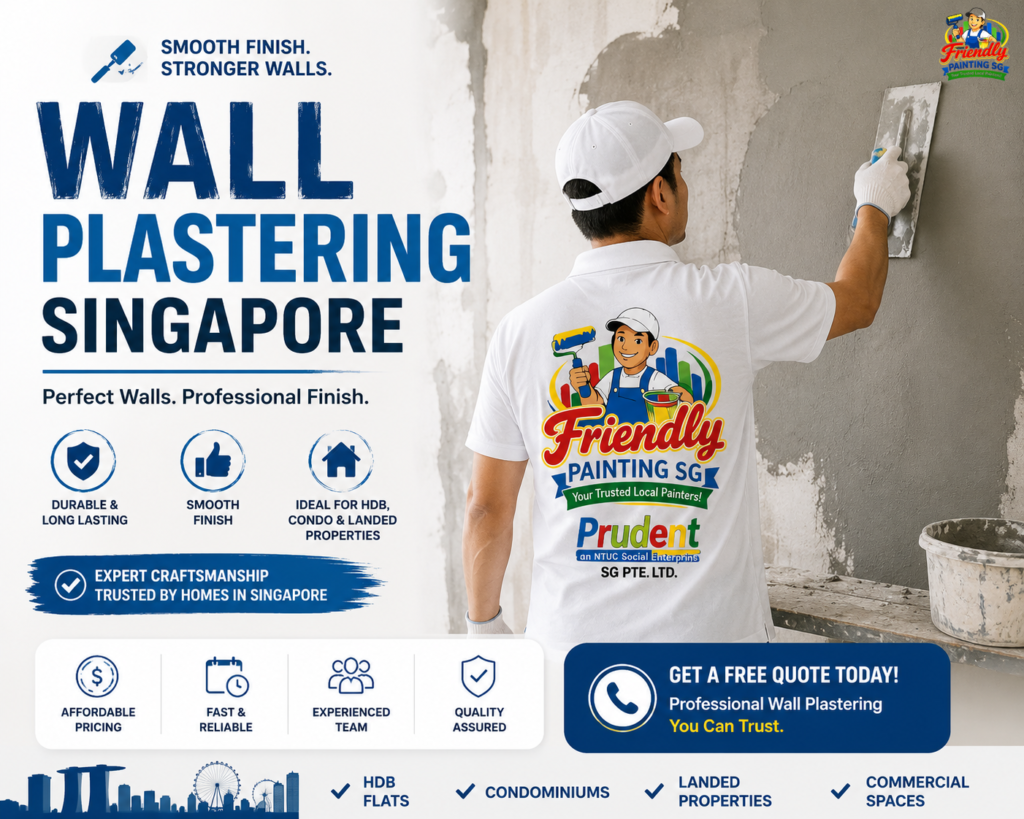
Searching for wall plastering singapore usually means your wall is not ready for painting yet. It may have cracks, dents, uneven patches, peeling areas, holes, rough surfaces, old repair marks, or damage left behind after renovation work. In many homes, a fresh coat of paint is not enough because the wall surface itself needs proper repair first.
Wall plastering helps prepare the wall so the final finish looks smoother, cleaner, and more professional. It is especially useful before repainting an HDB flat, condo, landed home, rental unit, office, or commercial space. When the wall surface is uneven, paint alone cannot hide every defect. In fact, new paint can sometimes make cracks and bumps more visible.
For Singapore homeowners, wall plastering is often needed before painting, after renovation, before moving into a resale unit, or when old walls start looking damaged. The key is to understand whether your wall needs simple patching, skim coating, plaster repair, or a more detailed surface restoration.
This guide explains what wall plastering is, when you need it, what wall plastering services Singapore usually include, how the process works, what affects the quotation, and how Painting Service Sg can help you prepare your walls properly before painting.
What Is Wall Plastering?
Wall plastering is the process of applying plaster or finishing material to a wall surface to make it smoother, stronger, and more even. It can be used to repair damaged areas, cover rough surfaces, fill imperfections, and prepare walls for painting.
A properly plastered wall gives paint a better surface to adhere to. As a result, the final paintwork can look cleaner and more polished.
Simple Meaning of Wall Plastering
In simple words, wall plastering means smoothing and repairing a wall before painting or finishing. The contractor checks the wall, fills damaged areas, applies plaster or skim coat where needed, smooths the surface, and prepares it for the next stage.
The job may be small if only one section is damaged. However, larger areas may need more detailed preparation.
Wall Plastering vs Wall Painting
Wall plastering and wall painting are not the same. Plastering repairs and smooths the wall surface. Painting adds colour and final visual finish.
If the wall has cracks, holes, bumps, or uneven patches, painting alone may not solve the problem. In that case, plastering should be done before painting.
Wall Plastering vs Skim Coating
Skim coating is often used to create a thin, smooth layer over a wall. Wall plastering may include deeper repair, patching, or surface levelling depending on the damage.
For minor unevenness, skim coating may be enough. For deeper cracks, holes, or damaged surfaces, more repair work may be needed first.
Why Wall Plastering Matters in Singapore Homes
Wall plastering matters because many Singapore homes have walls that go through years of use, humidity, drilling, renovation, patching, and repainting. Over time, small defects can build up.
A smooth wall can completely change how a room looks. Even a simple paint colour looks better when the surface underneath is clean and even.
Smooth Walls Improve the Final Paint Finish
Paint follows the surface underneath. If the wall is uneven, the paint finish will also look uneven. Light shining on the wall can reveal bumps, waves, dents, and patch marks.
Proper plastering helps reduce these issues before painting begins.
Plastering Helps Repair Uneven Surfaces
Uneven walls can happen because of old patching, poor previous workmanship, renovation damage, or natural wear over time. Plastering helps level the surface and create a cleaner foundation.
This is important for living rooms, bedrooms, feature walls, and areas that receive direct light.
Good Wall Preparation Can Prevent Repeated Problems
If cracks, loose paint, and damaged surfaces are ignored, the problem may return after painting. Good preparation reduces the chance of early peeling, patchy finish, or visible marks.
That is why plastering walls Singapore projects should start with proper inspection.
When Do You Need Wall Plastering in Singapore?
You may need wall plastering when the wall surface is damaged, uneven, rough, or not suitable for painting. Some signs are easy to see, while others become obvious only after closer inspection.
Cracked Walls
Cracks are one of the most common reasons for wall plastering. Hairline cracks may look small, but they can still show through paint if not prepared properly.
Larger cracks should be inspected carefully to understand whether they are surface-level or linked to deeper issues.
Uneven or Rough Wall Surface
If the wall feels rough, wavy, or bumpy, plastering can help smooth it. This is common in older flats or walls that have gone through multiple rounds of painting and patching.
A smoother surface gives a better final result.
Peeling Paint and Damaged Patches
Peeling paint should not be painted over directly. Loose material should be removed first. Then the surface may need patching, plastering, sanding, and priming before painting.
This helps the new paint last better.
Water Stains or Moisture-Affected Areas
Water stains may indicate leakage, seepage, or moisture problems. Before plastering, the source of moisture should be checked.
Plastering over a moisture problem without fixing the cause can lead to repeated damage.
Renovation or Repainting Preparation
After renovation, walls may have holes, scratches, patch marks, or uneven sections. Wall plastering helps prepare the surface before repainting.
This is especially useful after electrical works, carpentry changes, aircon trunking adjustments, or fixture removal.
Old HDB, Condo, or Rental Unit Refresh
Older homes and rental units often need wall repair before painting. Plastering can make the space look cleaner and more presentable before move-in, handover, or resale viewing.
Common Wall Problems That Plastering Can Fix
Wall plastering can solve many surface-level problems. However, the right method depends on the type and depth of damage.
Hairline Cracks
Hairline cracks are thin cracks on the wall surface. They may appear due to age, movement, old paint layers, or previous patching.
Proper filling and smoothing can reduce their visibility before painting.
Holes and Dents
Holes from screws, nails, wall plugs, shelves, hooks, and fixtures are common. Dents can also happen from furniture impact or daily use.
These areas should be filled and sanded before painting.
Bumpy Walls
Bumpy walls may come from poor plastering, thick old paint, uneven patching, or past renovation work. Depending on severity, skim coating or surface levelling may be needed.
Poor Previous Paintwork
Bad paintwork can leave roller marks, uneven texture, rough patches, or visible layers. Plastering may be needed if the surface is too uneven for repainting.
Patchy Wall Repairs
Previous repairs may not match the surrounding wall. The result can look patchy after painting.
A better plastering approach can blend repaired areas more smoothly.
Surface Damage After Removing Fixtures
Removing cabinets, mirrors, shelves, curtain brackets, TVs, or wall panels can leave marks and holes. Plastering helps restore the wall before repainting.
Wall Plastering Services Singapore: What Is Usually Included?
Professional wall plastering services singapore should include inspection, preparation, repair, smoothing, and final readiness for painting. The exact scope depends on wall condition.
Wall Condition Inspection
The contractor should first inspect the wall. This includes checking cracks, holes, peeling paint, uneven areas, stains, moisture marks, and previous patchwork.
Without inspection, it is difficult to recommend the right method.
Surface Cleaning and Preparation
Loose paint, dust, and weak material should be removed before plastering. A clean surface helps the plaster bond better.
Skipping preparation can lead to weak repair.
Crack and Hole Filling
Cracks, holes, and dents are filled before smoothing. The filling method depends on the size and depth of the damage.
Larger holes may need more careful repair than small nail marks.
Plaster Application
Plaster is applied to repair and level the wall. For large uneven areas, more work may be needed to create a consistent surface.
The application should be smooth and controlled.
Skimming and Smoothing
Skimming helps create a finer surface. This step is important when the wall needs to look smooth after painting.
A well-smoothed wall improves the final appearance.
Sanding and Final Surface Check
After drying, sanding helps remove rough edges and uneven areas. The contractor should check whether the surface is ready for paint.
Dust should be cleaned before painting begins.
Painting Preparation
If painting is included, the wall may need primer or sealer depending on condition. This step helps the paint adhere better and gives a cleaner finish.
Plastering Walls Singapore: Step-by-Step Process
Understanding the process helps homeowners know what to expect before booking.
Step 1: Check the Wall Condition
The contractor checks the wall and identifies the type of damage. This step determines whether simple patching, skim coating, or wider plastering is needed.
Step 2: Protect Nearby Areas
Floors, furniture, switches, built-ins, and nearby surfaces should be protected. Plastering can create dust and mess if protection is poor.
Good protection makes the job cleaner.
Step 3: Remove Loose Material
Loose paint, weak plaster, and flaky surfaces should be removed. A strong base is needed before new plaster is applied.
Step 4: Fill Cracks and Holes
Visible cracks and holes are filled first. This creates a more stable base for smoothing.
The repaired areas may need drying time before the next step.
Step 5: Apply Plaster or Skim Coat
The contractor applies plaster or skim coat based on the wall condition. The goal is to level the surface and reduce imperfections.
Step 6: Smooth and Level the Surface
The surface is smoothed carefully. Corners, edges, and visible wall sections need extra attention.
A neat surface is important for a premium-looking paint finish.
Step 7: Sand, Inspect, and Prepare for Painting
Once dry, the wall is sanded and inspected. After dust removal, the wall can be prepared for primer and painting if required.
Wall Plastering for Different Property Types
Different properties have different wall conditions and access needs.
HDB Wall Plastering
HDB flats often need plastering due to cracks, old paint layers, fixture removal, renovation damage, or resale preparation.
For occupied HDB flats, furniture protection and clean work are important.
Condo Wall Plastering
Condos may have feature walls, built-in carpentry, delicate flooring, and higher expectations for finishing. Plastering should be done neatly to match the overall interior style.
Landed House Wall Plastering
Landed homes may involve larger wall areas, staircases, higher walls, exterior-adjacent sections, or moisture-affected areas.
A proper inspection is useful before confirming the scope.
Rental Unit Wall Repair
Rental units may need plastering before handover or before new tenants move in. The goal is usually to make the unit look clean, presentable, and ready for use.
Office and Commercial Wall Plastering
Offices, shops, clinics, and commercial spaces may need wall plastering after renovation, signage removal, partition changes, or general wear.
For businesses, timeline and clean handover are important.
What Affects Wall Plastering Quote in Singapore?
The wall plastering quote depends on the actual condition and scope. Fixed claims can mislead because every wall is different.
Wall Condition
A wall with light marks needs less work than a wall with cracks, peeling paint, holes, and uneven surface.
The worse the condition, the more preparation may be needed.
Area Size
A small patch repair is different from plastering a full wall or multiple rooms. Area size affects labour, material, and timeline.
Depth of Damage
Surface scratches are easier to fix than deep holes or loose plaster. Deeper damage may need more careful repair.
Full Wall vs Spot Repair
Spot repair focuses on selected damaged areas. Full wall plastering or skimming gives a more consistent finish but needs more work.
The right choice depends on how visible the wall is and how smooth you want the final result.
Surface Preparation Needed
Loose paint removal, sanding, cleaning, stain treatment, and priming can affect the scope. Preparation should not be ignored.
Painting After Plastering
Some homeowners need plastering only. Others need plastering and painting together. If painting is included, the scope becomes larger.
Timeline and Access
Urgent work, restricted working hours, difficult access, or occupied-home conditions can affect planning.
Why Fixed Quotes Can Mislead Homeowners
A quote without wall photos or inspection may not reflect the actual work needed. For better guidance, share clear photos, wall size, property type, damage details, and whether painting is required.
How to Find the Best Wall Plastering Singapore Contractor
Finding the best wall plastering singapore contractor is not only about choosing the cheapest quote. Workmanship matters because wall defects can show clearly after painting.
Check Experience With Wall Repair
Choose a contractor who understands cracks, holes, uneven surfaces, peeling paint, and painting preparation.
Good plastering requires both repair skill and finishing awareness.
Ask About Preparation Work
Preparation is important. Ask how loose paint, cracks, holes, and rough patches will be handled before plastering.
A contractor who skips preparation may deliver weak results.
Confirm Whether Painting Is Included
Some contractors provide plastering only. Others provide plastering and painting together.
Confirm this early so there is no misunderstanding.
Review Communication and Scope Clarity
A good contractor should explain what will be repaired, what will be plastered, how the area will be prepared, and what happens after drying.
Clear communication prevents confusion.
Avoid Choosing Only by Lowest Quote
A low quote may exclude preparation, sanding, protection, or finishing. Compare scope and workmanship instead of only comparing the final number.
DIY Wall Plastering vs Hiring a Contractor
Some homeowners consider DIY wall plastering for small defects. This can work in simple cases, but larger repairs need skill.
When DIY May Work
DIY may work for tiny nail holes, small dents, or minor touch-up areas. It is more suitable when the wall is not highly visible and the damage is light.
When Professional Help Is Better
Professional help is better for large cracks, uneven walls, peeling paint, full wall skimming, moisture-affected areas, or repainting preparation.
A contractor can create a smoother and more consistent surface.
Common DIY Mistakes
Common DIY mistakes include applying too much filler, not sanding properly, painting too soon, ignoring moisture, and leaving patch marks visible.
These mistakes can make the wall look worse after painting.
Why Finishing Quality Matters
Wall plastering is judged after painting. If the surface is not smooth, the final colour may highlight imperfections.
That is why finishing quality matters.
Why Choose Painting Service Sg?
Painting Service Sg supports homeowners who need wall plastering and painting preparation in Singapore. The goal is to help create smoother walls, cleaner finishes, and better painting results.
Wall Repair and Painting Understanding
Plastering and painting work closely together. Painting Service Sg understands how wall repair affects the final paint finish.
This helps homeowners avoid painting over damaged surfaces.
Practical Inspection Before Work
Before recommending work, the wall condition should be checked. This helps determine whether spot repair, plastering, skim coating, or painting preparation is needed.
Clear Scope Guidance
Clear scope helps homeowners understand what will be done. Painting Service Sg can guide customers based on wall condition, property type, and painting needs.
Smooth Finish Preparation
A smooth finish starts with proper preparation. Patching, plastering, sanding, and surface checking all matter before painting.
Friendly Home Service Support
Home repair should feel simple and manageable. Painting Service Sg focuses on practical communication and friendly service support.
Common Mistakes to Avoid Before Wall Plastering
Avoid these mistakes before starting a plastering project.
Painting Over Damaged Walls
Painting over cracks, holes, or peeling paint does not solve the problem. The damage may still show after painting.
Ignoring Moisture Problems
If the wall has water stains or dampness, find the cause first. Plastering over moisture can lead to repeated damage.
Not Checking Wall Level
Some walls need more than patching. If the surface is wavy or uneven, broader skimming may be needed.
Rushing the Drying Process
Plaster needs proper drying time before sanding and painting. Rushing can affect the finish.
Booking Without Clear Scope
Always confirm whether the work includes plastering, sanding, primer, painting, protection, and cleaning.
Final Advice Before Booking Wall Plastering
Wall plastering Singapore services are useful when your walls have cracks, holes, rough patches, uneven surfaces, peeling paint, or damage after renovation. A smooth wall surface is the foundation of a good paint finish.
Before booking, check your wall condition and decide whether you need spot repair, full wall skimming, or plastering with painting. Share clear photos and explain whether the property is an HDB flat, condo, landed home, rental unit, office, or shop.
For homeowners who want smoother walls before repainting, Painting Service Sg can help with wall plastering guidance, surface preparation, and painting support.
Get your walls ready for a clean paint finish. Book Painting Service Sg for wall plastering and painting preparation in Singapore.
FAQs About Wall Plastering Singapore
1. What is wall plastering?
Wall plastering is the process of repairing, smoothing, and levelling wall surfaces before painting or finishing.
2. When do I need wall plastering in Singapore?
You may need wall plastering when walls have cracks, holes, dents, rough patches, peeling paint, uneven surfaces, or damage after renovation.
3. Is wall plastering the same as painting?
No. Wall plastering prepares and smooths the wall surface. Painting adds colour and the final visual finish.
4. What do wall plastering services Singapore usually include?
They may include wall inspection, surface preparation, crack filling, hole repair, plaster application, skimming, sanding, and painting preparation.
5. Can plastering fix cracked walls?
Yes, plastering can repair many surface cracks. However, deeper or recurring cracks should be inspected to understand the cause.
6. Can I paint directly over damaged walls?
It is not recommended. Painting over cracks, peeling paint, or uneven areas may make defects visible again. Wall preparation should come first.
7. What affects wall plastering quote in Singapore?
The quote depends on wall condition, area size, damage depth, preparation needed, full wall or spot repair, painting requirement, access, and timeline.
8. Is DIY wall plastering a good idea?
DIY may work for tiny holes or minor dents. Larger cracks, uneven walls, peeling paint, and full wall smoothing are better handled by professionals.
9. How do I choose the best wall plastering Singapore contractor?
Choose a contractor who explains the scope clearly, checks wall condition, understands preparation, and can provide smooth finishing before painting.
10. Does Painting Service Sg provide wall plastering services?
Yes, Painting Service Sg provides wall plastering and painting preparation support in Singapore based on wall condition and project scope.