
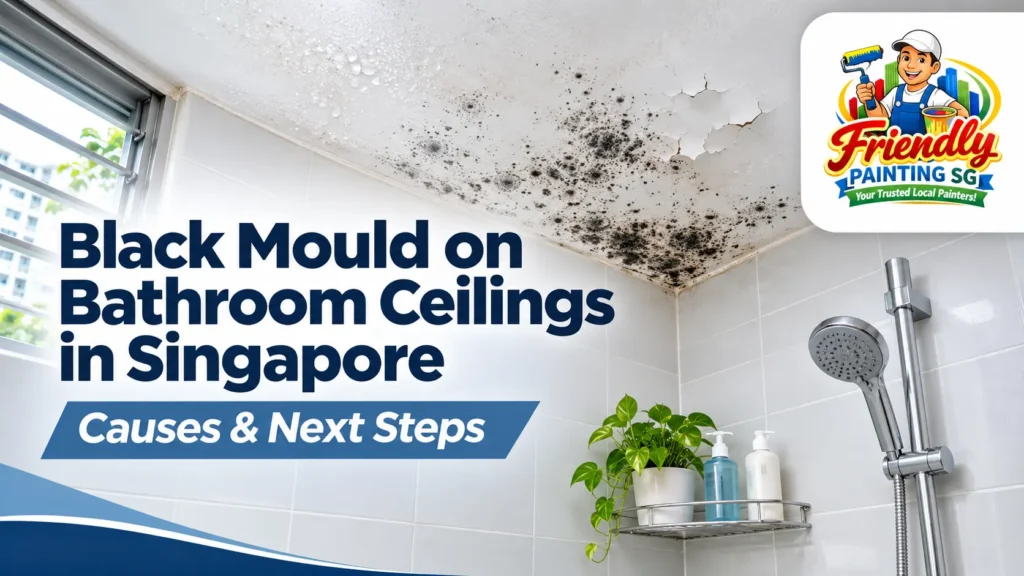
Black mould on bathroom ceiling Singapore is a common concern among homeowners, particularly in HDB flats, condominiums, and older residential properties. Singapore’s warm, humid climate, combined with everyday showering, insufficient ventilation, and hidden moisture problems, can create favourable conditions for mould growth.
If you notice black spots spreading across your bathroom ceiling, the most important step is to identify where the moisture is coming from. Although small patches of surface mould may sometimes be cleaned safely, recurring growth can indicate an unresolved condensation problem, plumbing leak, or water-damaged ceiling material.
Bathroom mould is more than an appearance issue. Persistent dampness may affect indoor air quality, damage paintwork, and create discomfort for people with respiratory sensitivities.
The good news is that many bathroom mould problems can be managed effectively when the underlying cause is addressed.
This guide explains why black mould develops on bathroom ceilings in Singapore, how to recognise warning signs, what cleaning methods may be appropriate, and when professional assistance is necessary. It also covers practical prevention strategies and important considerations for HDB residents dealing with ceiling leaks.
What Causes Black Mould on Bathroom Ceilings in Singapore?
Bathroom ceiling mould usually develops when moisture remains on a surface long enough for fungal spores to grow.
Mould spores naturally exist in indoor and outdoor environments. However, they generally need suitable moisture conditions to establish visible growth.
Several factors make Singapore bathrooms particularly vulnerable.
High Humidity and Singapore’s Tropical Climate
Singapore experiences warm temperatures and relatively high humidity throughout the year.
When indoor moisture remains elevated, bathroom ceilings may take longer to dry after showering.
This becomes especially problematic when the ceiling is poorly ventilated or has previously experienced water damage.
Humidity alone does not explain every mould problem. However, it can make moisture management more challenging.
Poor Ventilation and Trapped Bathroom Moisture
Poor bathroom ventilation allows humid air to remain trapped after hot showers.
Without adequate airflow, moisture can accumulate on ceilings, walls, mirrors, and other surfaces.
Common contributing factors include:
- Bathrooms without windows
- Faulty or undersized exhaust fans
- Blocked ventilation openings
- Doors kept closed for long periods
- Limited airflow between rooms
Improving ventilation can reduce surface condensation and help bathroom materials dry more efficiently.
Condensation from Hot Showers
Hot showers release water vapour into the surrounding air.
When humid air meets a cooler ceiling, moisture can condense into small droplets.
Over time, repeated condensation may provide enough moisture for mould to grow.
For example, a household that uses hot showers several times daily may experience persistent bathroom dampness if the ventilation system cannot remove moisture effectively.
Water Leaks and Hidden Plumbing Problems
Not all bathroom ceiling mould comes from condensation.
Sometimes, moisture enters the ceiling through leaking pipes, damaged waterproofing, or water seepage from an upstairs unit.
Signs suggesting a possible leak include:
- Yellow or brown ceiling stains
- Paint bubbling or peeling
- Persistent wet patches
- Water dripping from the ceiling
- Mould concentrated around one location
In Singapore HDB flats, ceiling seepage between units can occur when waterproofing materials deteriorate over time.
Damaged Ceiling Paint and Moisture Absorption
Cracked, peeling, or deteriorating ceiling paint may allow moisture to affect the underlying material.
Once the substrate becomes damp, simply wiping away visible mould may not resolve the problem.
The affected surface must be assessed, dried, and repaired where necessary before repainting.
Why Mould Grows Faster in Bathrooms Without Windows
Windowless bathrooms often rely heavily on mechanical ventilation.
If the exhaust fan is ineffective, moist air can remain inside the room after bathing.
Consequently, ceiling surfaces may stay damp longer.
A properly functioning exhaust fan and adequate replacement airflow are particularly important in these bathrooms.
How to Identify Black Mould on Your Bathroom Ceiling
Recognising early mould growth can help prevent a small moisture problem from becoming more difficult to manage.
However, dark ceiling marks are not always mould. Some may be stains, dirt deposits, or signs of water damage.
Common Signs of Bathroom Ceiling Mould
Black or Dark Green Spots on Ceiling Surfaces
One of the most recognisable warning signs is the appearance of small, irregular dark spots.
These may initially develop around ceiling corners, ventilation openings, or areas affected by condensation.
Over time, individual spots can merge into larger patches.
Musty Smells and Persistent Dampness
A persistent musty smell may indicate microbial growth, even when visible staining is limited.
Pay attention if the smell remains after ordinary cleaning or becomes stronger when the bathroom has been closed for several hours.
Peeling Paint, Water Stains, and Discolouration
Water-damaged ceilings may show bubbling paint, discoloured patches, or deteriorating plaster.
These signs do not automatically confirm mould.
Nevertheless, they suggest that moisture may be affecting the ceiling and should be investigated.
Is It Black Mould, Mildew, or a Water Stain?
The appearance and behaviour of a ceiling mark can provide useful clues.
| Ceiling Condition | Common Appearance | What It May Indicate |
|---|---|---|
| Surface mould | Irregular dark spots or patches | Persistent moisture and fungal growth |
| Mildew | Often superficial, powdery or patchy growth | Damp surface conditions |
| Water stain | Yellow, brown, or uneven discolouration | Previous or ongoing water penetration |
| Condensation marks | Damp patches that appear after showering | Inadequate ventilation or cold surfaces |
| Peeling paint | Flaking, blistering, or cracking | Moisture damage or coating deterioration |
Visual inspection alone cannot always determine the cause.
Can You Identify Dangerous Black Mould by Its Colour?
No. The colour of mould does not reliably indicate its species or potential health effects.
Different fungi can appear black, green, grey, or brown.
It is therefore more useful to assess the extent of growth, moisture conditions, and possible exposure than to assume every dark patch is a particular type of toxic mould.
Is Black Mould on Bathroom Ceilings Dangerous?
Indoor mould exposure can affect people differently.
Some individuals experience little or no noticeable reaction. Others may develop allergic or respiratory symptoms.
The severity of a problem depends on several factors, including the person’s health, sensitivity, and exposure conditions.
Potential Health Effects of Indoor Mould Exposure
Mould exposure may be associated with:
- Sneezing and nasal irritation
- Coughing
- Wheezing
- Itchy or watery eyes
- Skin irritation
- Aggravation of existing respiratory conditions
These symptoms can have several possible causes. Experiencing them does not automatically mean that bathroom mould is responsible.
Allergic Reactions and Respiratory Irritation
Some people are allergic or sensitive to mould.
Exposure may trigger nasal congestion, irritation, or other allergy-like symptoms.
Removing visible growth and correcting moisture problems can help reduce avoidable indoor exposure.
Why People with Asthma May Be More Sensitive
People with asthma may experience worsening respiratory symptoms when exposed to mould.
For this reason, anyone with asthma should avoid personally disturbing or cleaning significant mould contamination.
Who Is Most Vulnerable to Mould Exposure?
People who may require additional precautions include:
- Individuals with asthma
- People with chronic respiratory conditions
- Those with weakened immune systems
- People with known mould allergies
- Young children with respiratory sensitivities
For households with vulnerable occupants, early investigation and appropriate cleaning are especially important.
When Should You Seek Medical Advice?
Consider consulting a healthcare professional if respiratory symptoms develop or worsen around a damp or mouldy environment.
Persistent coughing, wheezing, or breathing difficulties deserve medical assessment.
Severe breathing difficulty requires urgent medical attention.
What Should You Do When You Find Black Mould on Your Bathroom Ceiling?
Discovering mould does not necessarily mean your entire ceiling needs replacing.
The correct response depends on the affected area, surface condition, moisture source, and household health considerations.
Step 1: Check the Size and Spread of the Mould
Start by examining the visible extent of the growth without touching or disturbing it.
A few small spots on an otherwise sound, dry, painted surface are different from a large mould-covered ceiling.
Look for signs that the contamination extends beyond the visible area.
These include widespread discolouration, deteriorating plaster, and persistent musty odours.
Step 2: Identify Condensation, Leaks, or Ventilation Problems
Try to determine when the ceiling becomes damp.
For example:
- Dampness appearing mainly after showering may suggest condensation.
- A persistent wet patch may indicate a leak.
- Staining that worsens during rainfall could suggest water penetration.
- Moisture beneath an upstairs bathroom may require a seepage investigation.
These observations are useful clues, not definitive diagnoses.
Step 3: Improve Ventilation and Reduce Moisture
Where safe, improve airflow by using an exhaust fan or opening suitable ventilation points.
Remove standing water from bathroom surfaces and avoid leaving damp towels inside poorly ventilated spaces.
However, ventilation alone cannot repair damaged waterproofing or leaking plumbing.
Step 4: Decide Whether DIY Cleaning Is Safe
Small areas of superficial mould on suitable, sound surfaces may sometimes be cleaned by a healthy adult using appropriate precautions.
The US Environmental Protection Agency uses approximately 10 square feet, or 0.93 square metres, as a general reference point when considering whether household mould cleanup may be manageable.
This is not a guarantee that all smaller jobs are safe.
Ceiling height, damaged materials, accessibility, and health conditions must also be considered.
Step 5: Arrange Professional Help for Extensive or Recurring Mould
Professional assessment is advisable when mould is widespread, repeatedly returns, or appears alongside substantial water damage.
When a Ceiling Leak Needs Repair Before Cleaning
If water continues entering the ceiling, cleaning alone will provide only temporary improvement.
Repairing the moisture source should take priority.
Why Repainting Alone Will Not Solve an Active Moisture Problem
Fresh paint may temporarily conceal dark marks.
However, it cannot stop water entering from a damaged pipe or waterproofing system.
The surface should be properly remediated and dried before a suitable coating is applied.
How to Remove Black Mould from a Bathroom Ceiling Safely
Bathroom ceiling mould removal requires more care than cleaning ordinary bathroom dirt.
The aim is to remove the contamination while preventing unnecessary exposure and further damage.
Essential Safety Precautions Before Cleaning
Before attempting a small cleaning job:
- Ensure the affected area is accessible without unsafe reaching or balancing.
- Wear protective gloves and suitable eye protection.
- Use appropriate respiratory protection, such as a properly fitted N95 respirator.
- Keep children and vulnerable occupants away.
- Provide adequate ventilation.
- Avoid dry brushing or sanding mouldy surfaces.
- Protect electrical fixtures from moisture.
Do not attempt ceiling cleaning if the surface is unstable, severely water-damaged, or close to exposed electrical components.
People with asthma, chronic lung disease, or weakened immune systems should not perform mould cleanup.
Cleaning Small Areas of Surface Mould
For a limited patch on a sound, washable surface, an appropriate approach may involve:
- Checking that the ceiling is structurally sound and not affected by an active leak.
- Preparing the area and wearing suitable protective equipment.
- Using a mild detergent and water on a suitable cloth.
- Gently cleaning the affected surface without vigorous scrubbing.
- Avoiding excessive water that could damage the ceiling.
- Drying the cleaned area thoroughly.
- Monitoring whether the mould returns.
Painted ceilings differ in their resistance to moisture and cleaning products.
Test compatibility where appropriate, and follow the coating manufacturer’s maintenance instructions.
Choosing Suitable Cleaning Products for Painted Ceilings
A mild detergent may be sufficient for small amounts of surface mould on suitable hard materials.
Strong chemical treatments are not automatically necessary.
In fact, routine bleach use is not generally recommended by the US EPA for ordinary mould cleanup.
Products should be compatible with the ceiling coating and used strictly according to their labels.
Why You Should Never Mix Bleach with Other Cleaning Chemicals
Never mix bleach with ammonia, acidic cleaners, toilet cleaners, or other household chemicals.
Dangerous gases can form.
Also, avoid spraying strong chemicals overhead, where droplets may contact your eyes or skin.
How to Dry the Ceiling After Cleaning
After cleaning, ensure that the ceiling dries completely.
Improve ventilation and monitor the surface.
If dampness remains despite adequate airflow, investigate possible concealed moisture.
Common Mistakes to Avoid During Bathroom Mould Removal
Common mistakes include:
- Painting over mould without cleaning
- Ignoring an active leak
- Scrubbing dry mould aggressively
- Applying excessive water to ceiling materials
- Mixing household cleaning chemicals
- Cleaning unstable ceiling surfaces
- Assuming dark stains always indicate dangerous mould
- Repeating surface treatment without investigating recurring growth
When DIY Mould Removal Is Not Recommended
Avoid DIY removal when:
- Large ceiling areas are affected.
- Mould appears embedded in damaged plasterboard.
- The ceiling is sagging or deteriorating.
- Water is actively leaking.
- Contamination returns repeatedly.
- Electrical hazards are present.
- Household members have significant health vulnerabilities.
In these circumstances, identifying the source and planning appropriate remediation is more important than immediately cleaning the visible marks.
Black Mould on HDB Bathroom Ceilings: What Singapore Residents Should Know
Bathroom ceiling mould in Singapore can involve building-specific maintenance responsibilities.
This is particularly relevant for HDB residents experiencing leaks between neighbouring flats.
Common Causes of Bathroom Ceiling Mould in HDB Flats
Potential causes include:
- Shower-related condensation
- Insufficient ventilation
- Deteriorating ceiling coatings
- Plumbing leaks
- Water seepage from upper-floor bathrooms
- Damaged waterproofing systems
Older bathrooms may be particularly susceptible to waterproofing deterioration, although the actual condition must be assessed individually.
How to Tell Whether Mould Is Caused by an Upstairs Leak
A ceiling leak may produce persistent dampness, localised staining, dripping water, or peeling paint.
However, condensation can sometimes produce similar-looking marks.
Consider these questions:
- Is the ceiling wet even when your bathroom has not been used?
- Does the affected area remain damp throughout the day?
- Is the mould concentrated beneath the upstairs bathroom?
- Are there expanding stains or signs of plaster damage?
If several answers suggest ongoing water penetration, a professional leak investigation may be appropriate.
What to Do If Water Is Seeping Through Your HDB Ceiling
HDB advises affected residents to communicate with their upstairs neighbours and arrange investigations where necessary.
Water seepage between neighbouring flats can contribute to persistent dampness and bathroom ceiling mould. If the ceiling remains wet despite adequate ventilation, residents should investigate whether the problem originates from an upstairs unit. According to HDB’s official guidance on ceiling leaks, affected flat owners should communicate with their neighbours, identify the source of leakage, and coordinate the necessary repairs. Addressing the underlying water problem is essential before treating or repainting the damaged ceiling.
When to Contact Your Upstairs Neighbour
If a leak appears to originate from the unit above, explain the problem calmly and share photographs.
Documenting the affected area and the dates when dampness appears may help with the investigation.
A coordinated inspection can identify the likely cause and appropriate repair method.
When to Seek Assistance from HDB
If you need guidance on an inter-floor seepage issue, consult HDB’s relevant procedures.
For leaks associated with common property, such as certain roof-related problems, the Town Council may be responsible.
Who Is Responsible for Bathroom Ceiling Leak Repairs?
Responsibility depends on the confirmed source of the leak.
For inter-floor leakage involving the floor or ceiling slab between HDB flats, the affected flat owners generally share responsibility for arranging repairs and splitting applicable costs.
For leakage originating from common property, different arrangements apply.
Therefore, residents should establish the source before deciding who will carry out the work.
Bathroom Ceiling Mould in Condominiums and Rental Properties
Condominium residents should notify their managing agent or Management Corporation Strata Title (MCST) where common property or shared building components may be involved.
Owners and tenants should review their tenancy agreement and report suspected leaks promptly.
Responsibility may depend on the source, relevant property rules, and contractual obligations.
Why Does Black Mould Keep Coming Back After Cleaning?
Recurring bathroom mould usually indicates that conditions continue to support fungal growth.
Removing visible patches does not necessarily eliminate the original moisture problem.
Recurring bathroom ceiling mould often indicates an unresolved moisture problem. Even after removing visible stains, fungal growth may return if condensation, poor ventilation, or damp ceiling materials remain untreated. Once the moisture source has been resolved, suitable anti-mould treatment and painting services can help restore affected surfaces and provide an appropriate protective finish.
Hidden Moisture Problems That Cleaning Cannot Fix
Water may remain inside porous ceiling materials or behind coatings.
Consequently, even when the visible surface looks clean, retained moisture can support further growth.
Inadequate Ventilation and Persistent Condensation
If steam accumulates after every shower, surface moisture may repeatedly return.
An effective cleaning routine cannot fully compensate for poor moisture control.
Water-Damaged Ceiling Materials and Recurring Mould
Some ceiling materials absorb water and become difficult to restore after extensive contamination.
Depending on the damage, removal and replacement may be necessary.
Why Painting Over Mould Is Not a Long-Term Solution
Paint should be applied only after contamination has been addressed and the underlying material is sufficiently dry.
Otherwise, peeling, staining, or renewed growth may occur.
How to Prevent Black Mould on Bathroom Ceilings in Singapore
Long-term mould prevention depends primarily on controlling moisture.
A practical maintenance routine should address ventilation, condensation, water leaks, and ceiling condition.
Choosing the right ceiling coating is an important part of long-term bathroom maintenance. Once existing mould has been properly treated and the underlying surface is completely dry, moisture-resistant paint may help protect the ceiling from everyday humidity. Homeowners considering ceiling painting services in Singapore should prioritise proper surface preparation, suitable bathroom coatings, and effective moisture control for lasting results.
Improve Bathroom Airflow and Ventilation
Good airflow helps remove moisture after bathing.
For Singapore homes with limited natural ventilation, the condition and effectiveness of the exhaust system are particularly important.
Use Exhaust Fans to Remove Moisture
Operate the bathroom exhaust fan during showering and allow it to continue running afterwards.
The required duration depends on bathroom size, airflow capacity, and how quickly the room dries.
Clean accessible fan grilles as recommended by the manufacturer.
Keep Bathroom Windows and Doors Open When Appropriate
Opening a bathroom window or door can help humid air escape when conditions allow.
However, outdoor humidity also matters.
During very humid or rainy weather, mechanical extraction or dehumidification may be more effective than relying entirely on outdoor airflow.
Reduce Condensation After Showering
Simple habits can reduce lingering moisture:
- Remove water from wet surfaces.
- Avoid unnecessarily long, very hot showers.
- Keep ventilation operating while the room dries.
- Avoid leaving soaked towels in enclosed bathrooms.
- Check whether condensation repeatedly forms on the ceiling.
Small daily improvements can reduce the time surfaces remain damp.
Repair Plumbing Leaks and Water Seepage Early
A small water leak can become a persistent moisture problem.
Investigate unexplained stains, dripping water, and damp ceiling patches promptly.
When necessary, engage a qualified professional to inspect plumbing or waterproofing.
Choose Suitable Moisture-Resistant Bathroom Paint
Bathroom-compatible coatings may offer improved resistance to moisture and surface fungal growth.
However, no paint can compensate for active leaks or consistently wet building materials.
Before repainting, ensure that the substrate is clean, stable, and dry.
Follow the coating manufacturer’s preparation and application recommendations.
Maintain a Regular Bathroom Cleaning Routine
Regular cleaning helps prevent dirt and residue from accumulating on bathroom surfaces.
Inspect less visible areas, including ceiling corners, ventilation openings, and spaces above shower areas.
Avoid treating routine cleaning as a substitute for moisture management.
Monitor Humidity and Look for Early Signs of Mould
A small hygrometer can help homeowners understand indoor humidity patterns.
For example, consistently high readings after showering may indicate that moisture removal needs improvement.
Humidity measurements should be considered alongside visible condensation, drying time, and possible water leaks.
When Should You Hire a Professional Mould Removal Service in Singapore?
Professional mould removal may be appropriate when contamination is extensive, hidden, recurring, or associated with significant water damage.
A specialist should address the underlying cause rather than simply remove visible stains.
Warning Signs That Require Professional Assessment
Consider professional assistance when you notice:
- Extensive mould covering ceiling sections
- Significant plaster deterioration
- Recurring contamination despite cleaning
- Persistent musty odours
- Suspected hidden mould
- Ongoing water seepage
- Mould around electrical fittings
A leaking or unstable ceiling may also require a building repair specialist before mould remediation begins.
What Happens During Professional Mould Inspection and Removal?
The exact process depends on the property and extent of damage.
Identifying the Source of Moisture
An assessment may include visual inspection, moisture measurements, and investigation of suspected leaks.
Assessing Affected Ceiling Materials
The contractor should determine whether the affected material can be cleaned or requires replacement.
Cleaning, Remediation, and Moisture Control
Depending on the findings, work may involve controlled cleaning, removal of damaged materials, drying, and recommendations for improving moisture management.
Repainting should follow only when the underlying problem has been resolved.
Questions to Ask Before Hiring a Mould Removal Specialist
Before accepting a quotation, ask:
- Will you investigate the source of the moisture?
- How will you assess whether ceiling materials need replacement?
- What safety precautions will be used?
- What work is included in the quotation?
- Will repairs, drying, and repainting be charged separately?
- How will you determine whether the remediation is complete?
- What should I do to prevent mould from returning?
Clear answers help homeowners understand the proposed work.
Factors That Affect Bathroom Ceiling Mould Removal Costs in Singapore
The cost of mould removal in Singapore depends on the actual condition of the bathroom.
Important considerations include:
| Cost Factor | How It Influences the Work |
|---|---|
| Affected area | Larger areas generally require more cleaning and preparation |
| Ceiling height | Difficult access may require additional equipment |
| Surface material | Porous or damaged materials may need replacement |
| Moisture source | Leak investigations and repairs increase the overall scope |
| Severity | Embedded contamination may require extensive remediation |
| Ventilation | Poor airflow may require corrective improvements |
| Repainting | Surface preparation and protective coatings add separate work |
A minor surface cleaning job is different from repairing a water-damaged ceiling.
For this reason, homeowners should request a written assessment and itemised quotation rather than relying on an assumed standard price.
Final Thoughts: Keep Your Bathroom Ceiling Mould-Free
Black mould on a bathroom ceiling should be treated as a sign that moisture conditions need attention.
In Singapore, humid weather and frequent bathroom use can contribute to condensation. However, persistent dampness may also result from plumbing defects, deteriorating waterproofing, or leaks between residential units.
The most effective response is to identify the cause, assess the condition of the ceiling, remove contamination safely, and prevent moisture from returning.
Address Moisture Problems Before Mould Spreads
Small patches can become more difficult to manage when damp conditions persist.
Early action may reduce damage to paintwork and ceiling materials while limiting unnecessary exposure.
Take the Right Next Step for a Cleaner, Healthier Bathroom
If the affected area is small and the surface is sound, careful cleaning and improved ventilation may be sufficient.
For extensive, recurring, or leak-related mould, seek an appropriate professional assessment.
Ultimately, lasting bathroom mould prevention depends on moisture control—not simply removing the visible black spots.
Frequently Asked Questions About Bathroom Ceiling Mould in Singapore
1. Why is black mould growing on my bathroom ceiling in Singapore?
Black mould commonly develops when moisture remains on a bathroom ceiling. Singapore’s humid climate, shower condensation, poor ventilation, and water leaks can all contribute. Identifying the moisture source is essential for preventing recurring growth.
2. Is black mould on a bathroom ceiling dangerous?
Bathroom mould may trigger allergies, respiratory irritation, or worsening asthma symptoms in sensitive individuals. However, its colour alone cannot determine how harmful it is. Visible growth should be addressed, and the underlying dampness should be corrected.
3. Can I remove black mould from my bathroom ceiling myself?
Small patches on suitable, sound surfaces may sometimes be cleaned using mild detergent and appropriate protective equipment. However, extensive mould, damaged plaster, active leaks, and hard-to-reach ceilings require additional precautions or professional assistance.
4. What is the best way to prevent bathroom ceiling mould?
The most effective approach is to control moisture. Use appropriate ventilation, reduce condensation after showering, repair leaks promptly, and inspect ceiling surfaces regularly. Moisture-resistant paint may help protect a properly prepared ceiling but cannot fix ongoing dampness.
5. Can I paint directly over black mould on my bathroom ceiling?
No. Painting directly over mould can conceal visible marks without resolving contamination or dampness. The affected surface should be cleaned or remediated, fully dried, and assessed before repainting.
6. Why does bathroom ceiling mould return after cleaning?
Recurring mould commonly indicates that the moisture source remains unresolved. Poor ventilation, repeated condensation, hidden leaks, or water-damaged ceiling materials can allow fungal growth to return even after surface cleaning.
7. Does an exhaust fan help prevent black mould in bathrooms?
Yes. A properly functioning exhaust fan can reduce moisture accumulation by extracting humid air. However, it must provide adequate airflow and discharge appropriately. It cannot resolve mould caused by leaking pipes or damaged waterproofing.
8. Who is responsible for mould caused by an HDB ceiling leak?
Responsibility depends on the source of the leak. For inter-floor seepage involving slabs between HDB flats, affected owners generally arrange repairs and share applicable costs. Leaks originating from common property may fall under the Town Council’s responsibilities.
9. How much does bathroom ceiling mould removal cost in Singapore?
Costs vary according to the affected area, accessibility, ceiling material, severity, and whether moisture repairs are required. Small surface treatments typically involve less work than extensive remediation or ceiling replacement. An itemised quotation provides a more reliable estimate.
10. When should I call a professional for bathroom ceiling mould?
Seek professional help when mould covers a large area, returns repeatedly, accompanies significant water damage, or appears on deteriorating ceiling materials. Professional assistance is also appropriate when safe access is difficult or household members have significant respiratory vulnerabilities.