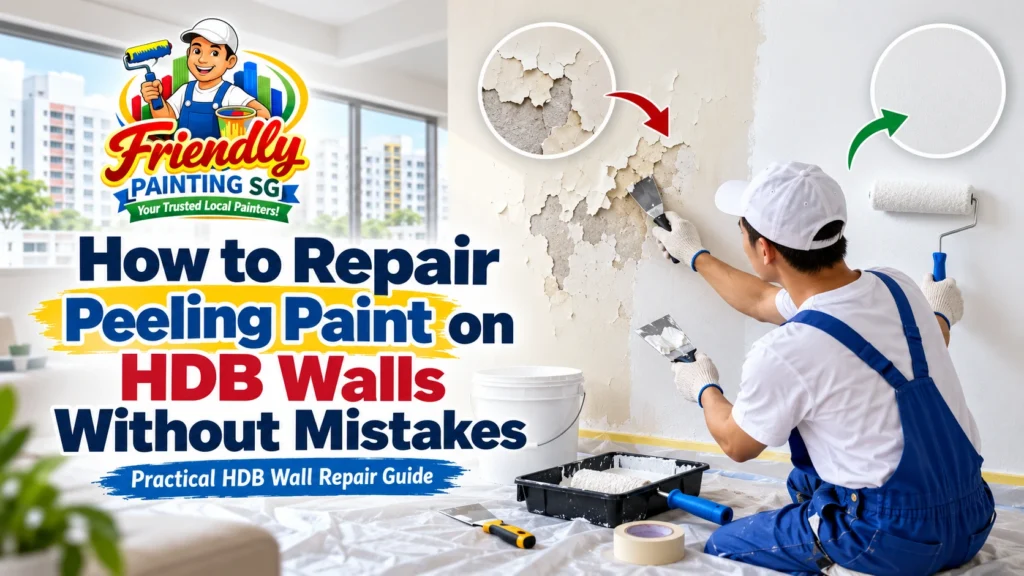
Peeling paint can make an otherwise beautiful HDB flat look old, neglected, and poorly maintained. If you are wondering how to repair peeling paint on HDB wall surfaces, the most effective approach is to identify the underlying problem, remove damaged paint, prepare the surface properly, apply a suitable sealer, and repaint with a compatible interior paint.
In Singapore, peeling wall paint is often associated with humidity, moisture penetration, inadequate surface preparation, or ageing coatings. However, applying another coat of paint without fixing the cause can lead to repeated peeling, bubbling, and uneven finishes.
Fortunately, homeowners can repair minor paint damage using basic tools and the correct techniques. More serious problems, such as persistent water seepage, extensive plaster deterioration, or spalling concrete, may require specialist attention.
This guide explains how to fix peeling paint on HDB walls, choose suitable repair materials, avoid costly mistakes, and maintain a smooth, attractive finish in Singapore’s tropical climate.
How to Repair Peeling Paint on HDB Wall: Quick Answer
To repair peeling paint on an HDB wall, first check for moisture, scrape away loose paint, clean and dry the surface, fill minor defects, sand until smooth, apply an appropriate wall sealer or primer, and finish with compatible interior paint.
The correct repair sequence is:
- Identify why the paint is peeling.
- Remove damaged or poorly bonded paint.
- Clean the surface and allow it to dry.
- Fill minor cracks and surface imperfections.
- Sand and remove dust.
- Apply a suitable primer or sealer.
- Repaint with thin, even coats.
- Inspect the finish after drying.
Important: Never repaint an actively damp wall. Paint alone cannot fix water leakage, and trapped moisture can cause the new coating to fail.
Can You Fix Peeling Wall Paint Yourself?
Yes. Small patches of peeling interior paint can often be repaired without hiring a contractor.
DIY repairs are generally suitable when the underlying plaster is firm, the wall is dry, and the damage affects only a limited area.
However, consider professional assessment if the wall remains damp, paint repeatedly blisters, large sections of plaster are loose, or cracking appears to extend into the substrate.
What Should You Check Before Starting the Repair?
Inspect the damaged area for:
- Damp patches and water stains
- Bubbling or blistering paint
- Soft or powdery plaster
- Mould growth and musty odours
- Cracks around windows and wall joints
- Loose concrete or exposed reinforcement
These signs help determine whether you are dealing with ordinary paint deterioration or a more serious building maintenance issue.
Why Is Paint Peeling Off HDB Walls in Singapore?
Understanding the cause of peeling paint is essential because different problems require different repairs.
High Humidity and Poor Ventilation
Singapore’s warm, humid climate can contribute to indoor moisture problems, particularly in bathrooms, kitchens, and poorly ventilated bedrooms.
When moisture repeatedly condenses on a wall or becomes trapped beneath a coating, the paint may gradually lose adhesion.
Rooms with limited airflow, damp corners, and furniture placed tightly against external walls may be more susceptible to moisture accumulation.
However, humidity alone does not explain every peeling paint problem. Surface preparation, substrate conditions, and coating compatibility also matter.
Water Seepage and Hidden Moisture Problems
Water seepage can cause significant paint deterioration.
Common warning signs include dark stains, recurring blisters, soft plaster, and paint that peels shortly after repainting.
Possible moisture sources include leaking pipes, defective sealants around windows, bathroom waterproofing problems, and water entering through external building surfaces.
Before repairing the finish, identify the moisture source and arrange the appropriate correction.
For suspected building-related seepage, contact the relevant party, such as HDB, the Town Council, building management, or a qualified contractor, depending on where the problem originates.
Poor Surface Preparation and Wrong Paint Application
Paint adhesion depends on a clean, sound surface.
If a previous painting job was completed over dust, chalky paint, grease, or damaged plaster, the coating may not bond properly.
Similarly, applying incompatible products or ignoring manufacturer instructions can lead to cracking, bubbling, or premature peeling.
This is why thorough surface preparation is often more important than simply purchasing expensive paint.
Ageing Paint, Damp Plaster and Wall Cracks
Interior coatings gradually deteriorate through ordinary wear, cleaning, environmental exposure, and repeated temperature or moisture changes.
Minor cracks may also appear around joints between different building materials.
For example, movement between a concrete structural element and an adjoining block wall can produce cracks over time.
When cracks widen, recur, or affect the underlying structure, seek professional assessment instead of simply concealing them with filler.
How to Identify the Real Cause of Peeling Paint
Look beyond the visible damage to understand its pattern.
Signs of Moisture-Related Paint Damage
Moisture-related problems may produce:
- Paint bubbles containing dampness
- Persistent discoloration
- Mould spots
- Wet or softened plaster
- Recurring damage in the same area
Signs of Paint Adhesion Failure
Poor adhesion often causes paint to lift in dry flakes or sheets while the underlying surface remains firm and dry.
Chalky residue, poor bonding between old and new coats, or widespread peeling after repainting may suggest inadequate preparation or incompatible coatings.
Identifying this difference helps prevent unnecessary repairs.
Before choosing a repair method, homeowners should understand whether the damage comes from high humidity, water seepage, ageing coatings, or poor surface preparation. These issues often produce similar symptoms but require different treatments. Understanding why paint is peeling from walls in Singapore can help you identify the underlying cause and prevent the problem from returning.
What Tools and Materials Do You Need to Repair Peeling Paint?
Having the correct equipment improves repair quality, reduces mess, and helps you achieve a consistent finish.
Essential Tools for Removing Loose Paint
For a typical minor HDB wall repair, prepare:
- Paint scraper or putty knife
- Fine- and medium-grit sandpaper
- Sanding block
- Soft brush and cleaning cloth
- Suitable wall filler
- Primer or wall sealer
- Interior wall paint
- Roller and paintbrush
- Painter’s tape and protective floor sheets
Choose tools appropriate for the condition of the wall rather than using aggressive scraping methods.
Wall Putty, Sealer, Primer and Interior Paint
Each material has a different purpose.
| Material | Main purpose |
|---|---|
| Wall filler | Repairs minor holes and surface defects |
| Skim coat | Levels suitable uneven surfaces |
| Wall sealer | Stabilises compatible porous or chalky surfaces |
| Primer | Improves adhesion and prepares the substrate |
| Interior paint | Provides the final decorative and protective coating |
Not every wall needs all these products. Select materials according to the substrate and follow the manufacturer’s application system.
Safety Equipment and Furniture Protection
Wear protective eyewear, suitable gloves, and a mask or respirator appropriate for the dust being generated.
Move furniture away from the work area and cover floors with protective sheets.
Avoid dry sanding unknown older coatings without assessing potential hazards. If hazardous paint materials are suspected, seek specialist advice.
Step-by-Step Guide to Repair Peeling Paint on HDB Walls
A durable repair follows a logical sequence. Skipping even one important stage can compromise the final result.
Step 1 – Inspect the Wall and Identify the Source of Damage
Start by examining the affected area and surrounding wall.
Determine whether peeling is limited to the paint film or extends into the plaster.
Press lightly around the damaged section to check whether the surface is firm. Do not disturb areas with loose concrete or suspected structural damage.
Check for Water Leaks, Dampness and Mould
If moisture is present, investigate the source before proceeding.
A damp wall may need plumbing repairs, waterproofing attention, or further inspection.
Where substantial mould contamination is visible, address both the moisture problem and contamination safely before decorating.
Step 2 – Remove Loose and Flaking Paint
Use a paint scraper to remove sections that have already detached or are poorly bonded.
Work carefully from the edge of the damaged area toward the surrounding sound coating.
Continue until the remaining paint is firmly attached.
How to Scrape Peeling Paint Without Damaging the Plaster
Hold the scraper at a shallow angle and apply controlled pressure.
Avoid digging into the plaster or gouging the substrate.
If large areas continue lifting, a wider surface preparation process may be necessary.
Step 3 – Clean and Dry the Affected Wall Surface
Once loose paint has been removed, brush away dust and debris.
Use a suitable cleaning method for the existing coating and allow the wall to dry thoroughly.
Grease, detergent residue, or powdery material can interfere with adhesion, so the surface should be clean before further treatment.
How to Check Whether the Wall Is Ready for Repair
The wall should be dry, firm, clean, and free from continuing moisture problems.
Visual dryness alone is not always sufficient. For recurring dampness, a suitable moisture assessment may be necessary.
Do not proceed merely because a stain temporarily appears lighter.
Step 4 – Repair Cracks, Holes and Damaged Plaster
Apply a compatible wall filler to small cracks, holes, and shallow imperfections.
Use a filling knife to spread the material evenly, following the manufacturer’s recommended thickness.
Allow the filler to cure before sanding or painting.
If plaster is severely weakened, detached, or contaminated by persistent moisture, simple surface filling may not be enough.
When peeling paint exposes cracked plaster or uneven wall surfaces, applying fresh paint alone may not produce a lasting finish. Damaged areas should be assessed, repaired with compatible materials, and smoothed before priming. If the surface requires more extensive restoration, wall crack repair and plastering services can help address damaged plaster and prepare HDB walls for repainting.
Apply Wall Filler or Skim Coat Correctly
Use filler for isolated defects and an appropriate skim coat for broader surface unevenness.
Apply only to a properly prepared, sound substrate.
Several controlled applications may perform better than one excessively thick layer, depending on the product specifications.
Step 5 – Sand the Repaired Area for a Smooth Finish
After the filler has dried or cured, sand the repaired area gently.
Blend the repaired edges into the surrounding wall so that the transition becomes less visible.
Remove all sanding dust before priming.
A smooth surface helps reduce visible patches, roller marks, and differences in paint texture.
Step 6 – Apply the Right Wall Sealer or Primer
A suitable primer or sealer prepares the wall for the finishing paint.
This step is especially important on repaired, porous, or previously chalky surfaces.
Choose a product compatible with the wall substrate, filler, and planned topcoat.
Why Primer Matters for Long-Lasting Paint Adhesion
Primer can improve adhesion, provide more consistent absorption, and help produce a uniform finish.
However, it cannot permanently stabilise severely deteriorated plaster or prevent damage caused by active leakage.
Prepare the surface properly before relying on the primer.
Step 7 – Repaint the HDB Wall Using the Correct Technique
Once the primer is ready for recoating, apply a suitable interior wall paint.
Use a brush around corners and edges, followed by a roller on larger sections.
Maintain an even application and avoid repeatedly rolling over paint that has begun drying.
How Many Coats of Paint Should You Apply?
Many interior paint systems recommend two finishing coats, although requirements depend on the product, surface colour, and existing substrate.
Check the manufacturer’s technical instructions rather than assuming every coating system requires the same number.
Allow the Recommended Drying Time Between Coats
Drying and recoating times vary with temperature, ventilation, humidity, and paint formulation.
Applying another coat too early may cause uneven drying or adhesion problems.
Follow the specified recoating interval and allow adequate ventilation.
Step 8 – Inspect the Finish and Clean the Work Area
After the final coat has dried, inspect the repaired section under normal room lighting.
Check for:
- Visible filler marks
- Uneven sheen
- Missed patches
- Remaining blisters
- Roller lines or rough texture
A small spot repair may remain noticeable because older paint changes colour over time. Painting the full wall from corner to corner can sometimes provide a more consistent appearance.
Common Mistakes to Avoid When Fixing Peeling Paint
Even a straightforward DIY repair can fail when important preparation steps are overlooked.
Painting Directly Over Loose or Flaking Paint
A fresh coat cannot secure paint that has already lost adhesion.
As the unstable layer continues lifting, the new paint can peel away with it.
Always remove loose material before repainting.
Ignoring Dampness and Water Seepage
Moisture-related problems require more than decorative treatment.
Covering damp patches may temporarily hide the symptoms, but bubbling and deterioration can return.
Resolve the source and verify drying before applying another coating.
Skipping Surface Preparation and Primer
Dust, grease, and weak substrate layers reduce the reliability of a paint system.
Where appropriate, proper cleaning, sanding, and priming support a better result.
Using the Wrong Paint for Humid Areas
A paint designed for one environment may not be suitable for another.
For example, bathrooms with frequent condensation can benefit from moisture-resistant interior coatings, provided water intrusion and ventilation issues have already been addressed.
Applying Thick Coats or Repainting Too Soon
Excessively thick coats can produce uneven drying, sagging, and poor surface appearance.
Instead, follow the recommended coverage, application thickness, and recoating time.
Which Paint Is Best for HDB Walls After Repair?
The best paint depends on the room, existing substrate, maintenance needs, and moisture exposure.
Choosing Interior Paint for Singapore’s Humid Climate
For ordinary living rooms and bedrooms, consider a reputable water-based interior paint with good adhesion, suitable washability, and compatibility with the primer.
Washable finishes are useful in frequently occupied spaces, particularly where walls are cleaned regularly.
A durable paint system still depends on proper preparation.
Anti-Mould Paint for Bathrooms and Kitchens
Anti-mould coatings can help resist mould growth on the painted surface under suitable conditions.
However, these products do not eliminate moisture or replace effective ventilation.
In persistently wet areas, first address leaks, condensation, and other sources of dampness.
Low-VOC Paint for Bedrooms and Living Rooms
Low-VOC interior paints may be useful for households seeking products with reduced volatile organic compound emissions.
Nevertheless, low-VOC does not mean completely emission-free.
Maintain ventilation during application and follow product safety guidance, especially before reoccupying a freshly painted room.
How to Choose a Compatible Sealer and Topcoat
A complete painting system should match the substrate and intended finish.
Consider porosity, previous coatings, repair materials, exposure conditions, and the manufacturer’s recommendations.
Using compatible materials is generally more reliable than combining unrelated products without checking their specifications.
How Much Does It Cost to Repair Peeling Paint on HDB Walls in Singapore?
The cost of peeling paint repair in Singapore depends on the extent of damage, surface condition, materials, and whether specialist work is required.
A minor dry patch is generally simpler to repair than a wall affected by recurring water seepage.
DIY Repair Costs and Materials
DIY costs mainly involve tools, filler, primer, paint, and protective materials.
For a small area, the quantity of materials required may be limited. However, buying full containers for one patch can affect overall value.
If the wall has significant hidden damage, DIY repairs may become less economical.
Factors Affecting HDB Wall Painting and Repair Costs
Several factors influence the overall budget.
| Cost factor | Effect on repair work |
|---|---|
| Area of damage | Larger areas require more preparation and paint |
| Wall condition | Loose plaster increases repair complexity |
| Moisture problems | Investigation and corrective work may be necessary |
| Paint selection | Different coating systems have different material costs |
| Access and furniture | Protection and preparation may require extra labour |
| Finish requirements | Full-wall repainting can require additional work |
An accurate quotation should distinguish decorative repainting from plaster repairs, waterproofing, and other corrective work.
Is DIY Repair or Hiring a Painting Contractor More Cost-Effective?
DIY repair may be the more economical option for a small, dry, accessible patch.
Professional services become more valuable when damage is widespread, surface preparation is complicated, or the wall requires extensive restoration.
The most cost-effective solution is not always the cheapest initial quotation. A repair that addresses the actual cause can reduce the likelihood of repeated work.
When Should You Hire a Painting Service for HDB Wall Repairs?
A qualified contractor can help assess wall conditions, recommend an appropriate repair system, and complete preparation and painting work.
However, painting contractors should not be expected to solve every plumbing, waterproofing, or structural problem themselves.
Signs That Peeling Paint Needs More Than a DIY Fix
Seek professional assessment if:
- Paint keeps peeling after previous repairs.
- Damp patches remain visible.
- Large portions of plaster are loose.
- Mould contamination is extensive.
- Cracks are widening or recurring.
- Concrete is bulging or breaking away.
These conditions may require investigation before cosmetic repairs.
Peeling Paint vs Water Seepage and Spalling Concrete
Peeling paint, water seepage, and spalling concrete are different issues.
Ordinary peeling paint primarily affects the coating. Water seepage involves unwanted moisture entering or accumulating within building materials.
Spalling concrete occurs when concrete cracks, bulges, or detaches, commonly associated with corrosion of embedded reinforcement.
Singapore’s HDB treats spalling concrete as a maintenance issue requiring timely attention, particularly when loose concrete could create a safety risk
If you notice exposed steel reinforcement, falling concrete, or significant ceiling damage, avoid treating the problem as a normal paint repair.
Peeling paint should not be confused with spalling concrete, particularly when ceiling surfaces show cracks, bulging, or loose concrete. Singapore’s Housing & Development Board provides official guidance on preventing and repairing spalling concrete, including maintenance precautions and repair considerations. Homeowners should investigate suspected concrete deterioration rather than covering the affected area with paint.
What to Expect From an HDB Wall Painting Service in Singapore
A suitable painting service should explain the condition of the wall, planned preparation, repair materials, and finishing process.
If you need assistance with damaged HDB interiors, an experienced HDB painting service in Singapore can help assess the decorative repair requirements and recommend an appropriate painting approach.
For broader interior repainting projects, consider an interior painting service that includes proper surface preparation rather than simply covering existing defects.
What to Check Before Hiring a Painting Contractor
Ask whether the quotation includes paint removal, filling, sanding, primer, finishing coats, and cleanup.
Clarify how moisture-related problems will be handled, which products will be used, and whether specialist repairs are excluded.
A transparent scope of work makes it easier to compare quotations and avoid unexpected additions.
How to Prevent Paint From Peeling Again on HDB Walls
Preventive maintenance helps protect the appearance and condition of painted surfaces.
Although no paint finish lasts indefinitely, a few practical habits can reduce avoidable deterioration.
Improve Airflow and Control Indoor Humidity
Encourage ventilation when outdoor conditions permit, particularly after showering or cooking.
Use appropriate exhaust ventilation and manage condensation-prone areas.
Avoid placing large furniture directly against walls where persistent moisture or poor airflow has been observed.
Fix Water Leaks Before Repainting
Inspect water stains and unusual damp patches promptly.
Problems involving plumbing, window seals, or waterproofing should be corrected before cosmetic repairs.
Repainting without investigating recurrent moisture can result in repeated damage.
Maintain Bathroom, Kitchen and Bedroom Walls
Different rooms require different maintenance practices.
Bathroom walls may need more attention to condensation, while kitchen surfaces may accumulate grease and cleaning residues.
In bedrooms, inspect poorly ventilated corners and the spaces behind large furniture.
Use cleaning methods suitable for the existing paint finish.
Inspect Painted Walls and Address Early Damage
Regularly check for small blisters, cracks, discoloration, or powdery paint.
Early inspection makes it easier to determine whether a problem is cosmetic or moisture-related.
Keep a record of recurring patches, especially when damage appears near plumbing lines, windows, or wet areas.
Final Thoughts: Repair Peeling HDB Wall Paint the Right Way
Learning how to repair peeling paint on HDB wall surfaces is about more than achieving a fresh appearance. A reliable repair starts with understanding why the existing coating failed and choosing the right treatment for the underlying condition.
For minor damage, careful scraping, cleaning, filling, sanding, priming, and repainting can restore a smooth finish. However, moisture problems, weakened plaster, and spalling concrete require more careful investigation.
In Singapore’s humid environment, selecting compatible materials and maintaining adequate ventilation are particularly important.
If peeling paint keeps returning or affects large areas, a suitable painting service in Singapore can help with surface preparation and repainting once any underlying maintenance issues have been resolved.
A well-prepared wall, appropriate materials, and a careful application process provide the strongest foundation for a clean, attractive, and longer-lasting finish.
Frequently Asked Questions About Peeling Paint on HDB Walls
1. What Is the Best Way to Fix Peeling Paint on HDB Walls?
The best method is to identify the cause, remove loose paint, clean and dry the surface, repair small defects, apply a compatible primer, and repaint. Any active moisture problem must be resolved first.
2. Can I Paint Directly Over Peeling Paint?
No. Painting directly over poorly bonded paint can cause the new coating to peel as the underlying layer continues detaching. Remove unstable material and prepare the wall before repainting.
3. Why Does Paint Keep Peeling Off My HDB Wall?
Recurring peeling may indicate hidden moisture, poor adhesion, incompatible coatings, or damaged plaster. Check the wall’s condition and investigate any repeated dampness before applying new paint.
4. How Do I Repair Peeling Paint Caused by Moisture?
First identify and correct the moisture source. Allow the wall to dry adequately, remove affected paint and unsound material, repair the substrate, and apply a suitable coating system.
5. Do I Need to Remove All the Old Paint Before Repainting?
Not necessarily. Existing paint that is clean, sound, firmly attached, and compatible with the new coating may remain. Loose, flaking, or deteriorated paint should be removed.
6. Should I Use Wall Sealer Before Painting an HDB Wall?
A suitable sealer may be recommended for porous, chalky, or repaired surfaces. Whether it is necessary depends on the substrate and paint system. Follow the coating manufacturer’s instructions.
7. How Long Should I Wait Before Repainting a Repaired Wall?
Wait until the filler or repair material has cured sufficiently and the primer is ready for recoating. Exact drying times depend on the product, application thickness, humidity, and ventilation.
8. What Type of Paint Is Best for Humid HDB Rooms?
Choose a compatible interior paint suited to the room’s moisture exposure. Washable or mould-resistant formulations may be appropriate, but persistent dampness must still be corrected.
9. Can I Repair Peeling Paint on an HDB Ceiling Myself?
Small cosmetic areas may be manageable if the substrate is sound and access is safe. However, cracked or falling concrete, exposed reinforcement, and suspected spalling concrete require particular caution and may need a qualified contractor.
10. When Should I Call a Painting Contractor in Singapore?
Consider professional help when peeling affects large areas, plaster is damaged, repairs repeatedly fail, or a consistent full-wall finish is required. For active leakage or structural concerns, arrange the relevant specialist assessment before repainting.