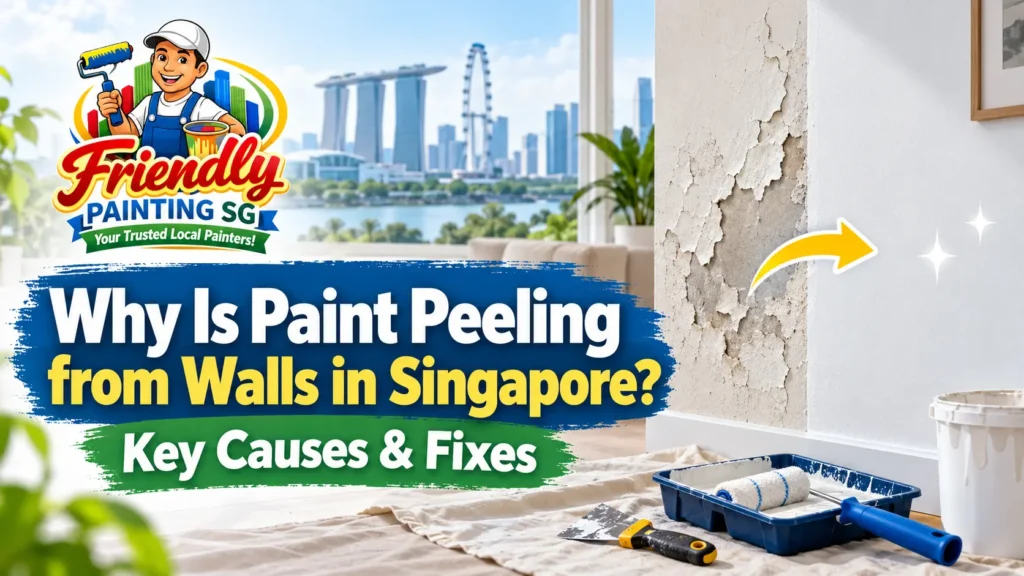
Are you wondering why is paint peeling from walls in Singapore, even after a fresh coat of paint? You’re not alone. Many homeowners experience flaking paint, bubbling walls, damp patches, and cracked finishes, particularly in HDB flats, condominiums, and older residential properties.
Singapore’s tropical climate, frequent rainfall, high humidity, and moisture-related building problems can contribute to premature paint failure. However, the weather isn’t always responsible. Poor surface preparation, water seepage, unsuitable primers, and incorrect painting techniques can also weaken paint adhesion.
The good news is that peeling wall paint can often be repaired successfully once the underlying problem is identified.
This guide explains the common causes of wall paint peeling in Singapore, how to diagnose different types of damage, practical repair methods, suitable paint systems, and preventive maintenance tips. You’ll also learn when DIY repairs are appropriate and when professional painting services may be necessary.
Why Is Paint Peeling from Walls in Singapore? (Quick Answer)
Paint usually peels from walls in Singapore because moisture, poor surface preparation, incompatible paint, or deteriorating plaster weakens the bond between the coating and the wall. High humidity, condensation, plumbing leaks, and water seepage can accelerate the problem. A lasting repair requires identifying the cause, treating the wall, applying a compatible primer, and repainting only after the surface is sufficiently dry.
How Singapore’s Hot and Humid Climate Affects Wall Paint
According to the Meteorological Service Singapore, Singapore experiences high humidity and abundant rainfall throughout the year. These conditions can contribute to moisture-related paint problems, particularly in poorly ventilated homes.
Singapore experiences warm temperatures and high humidity throughout the year. These conditions influence how paint dries, cures, and performs over time.
When indoor ventilation is inadequate, moisture may accumulate on cool surfaces. Repeated condensation can create damp conditions that affect paint adhesion and encourage mould growth.
Air-conditioned bedrooms, poorly ventilated bathrooms, and enclosed kitchens may be especially vulnerable.
However, humidity alone does not mean a properly prepared wall will inevitably peel. Modern paint systems can perform well in Singapore when applied under suitable conditions.
Why Moisture and Poor Paint Adhesion Cause Peeling
Wall paint depends on a stable bond between the painted surface, primer, and finishing coat.
When water enters the wall or the original coating becomes unstable, this bond can weaken. Eventually, the paint starts lifting, cracking, or separating from the underlying material.
Paint applied over dust, chalky residue, or damp plaster faces similar problems because it cannot establish reliable adhesion.
Is Peeling Paint a Cosmetic Problem or a Sign of Wall Damage?
Small areas of peeling may be caused by ordinary coating deterioration. However, repeated peeling, persistent damp patches, and bubbling paint can indicate a deeper moisture problem.
Pay particular attention to damage accompanied by:
- Brown or yellow water stains
- Musty smells or visible mould
- Soft, powdery, or crumbling plaster
- Expanding cracks
- Repeated paint failure in the same location
These symptoms deserve investigation before repainting.
8 Common Causes of Paint Peeling from Walls in Singapore
Understanding the cause is the most important step in choosing the right repair. Different sources of damage require different solutions.
1. High Humidity and Excess Moisture
High humidity can slow drying and contribute to condensation, especially where air circulation is poor.
If moisture repeatedly collects on a wall, the paint film may gradually lose adhesion.
Why Bathrooms, Kitchens, and Poorly Ventilated Rooms Are More Vulnerable
Bathrooms produce significant moisture during showers, while cooking generates water vapour that can settle on nearby surfaces.
Rooms without effective ventilation may remain damp long after these activities finish.
Recommended solution: Improve ventilation, control condensation, and select a suitable coating for the room’s conditions.
2. Water Seepage and Hidden Plumbing Leaks
Water seepage is among the more serious causes of peeling paint in Singapore homes.
Moisture may enter through deteriorated waterproofing, leaking pipes, damaged exterior surfaces, or defects around windows.
When moisture enters through damaged waterproofing, leaking pipes, or exterior wall defects, suitable waterproofing services in Singapore can help address the underlying issue before repainting.
How to Identify Damp Patches and Water-Damaged Paint
Look for irregular stains, darkened plaster, persistent bubbling, or dampness concentrated around bathrooms and ceilings.
A moisture meter can support diagnosis, but it may not identify the exact source of a leak.
Recommended solution: Repair the water source before attempting cosmetic restoration.
3. Poor Surface Preparation Before Painting
Even high-quality paint may fail when applied to an unsuitable surface.
Old walls often contain loose paint, grease, dust, or chalky deposits. These materials prevent proper bonding between the coating and the wall.
How Dust, Grease, and Old Paint Reduce Adhesion
When a painter applies fresh paint over unstable material, the coating bonds to the residue rather than a sound substrate.
As the weak underlying layer detaches, the new paint separates with it.
Recommended solution: Remove loose coatings, clean thoroughly, repair damaged areas, and prime appropriately.
4. Using the Wrong Paint or Primer
Not every paint formulation works on every wall surface.
Paint intended for exterior masonry may have different performance characteristics from interior emulsion paint. Similarly, previously painted surfaces may require specific preparation before recoating.
Why Paint Compatibility Matters in Singapore Homes
A compatible primer creates a suitable foundation for the finishing coat.
Using an incorrect primer or applying new paint over incompatible coatings may result in peeling, poor coverage, or premature deterioration.
Recommended solution: Follow the coating manufacturer’s specifications for the existing substrate and intended environment.
5. Painting Over Damp Walls or Uncured Plaster
New plaster, repaired cement surfaces, and water-damaged walls must reach suitable moisture and curing conditions before painting.
Otherwise, trapped moisture and alkalinity can interfere with coating performance.
Repainting immediately after a leak is repaired is particularly risky because the wall may still contain significant internal moisture.
Recommended solution: Verify drying and curing requirements instead of relying only on the wall’s appearance.
6. Mould Growth and Condensation
Mould may develop where moisture, suitable temperatures, and organic material are present.
Affected areas sometimes show dark spots, discolouration, or recurring surface contamination.
Painting directly over mould does not address the moisture conditions allowing it to grow.
Recommended solution: Correct the moisture problem and safely remove mould before repainting. Extensive contamination may require specialist remediation.
When mould repeatedly develops on damp walls, anti-mould treatment and painting services may help restore affected surfaces after the moisture source has been addressed.
7. Cracks, Ageing Plaster, and Wall Movement
Minor movement, temperature changes, and ageing can cause hairline cracks in plaster or painted surfaces.
If a coating bridges these cracks without suitable repair, continued movement may eventually produce visible flaking.
However, significant or widening cracks can suggest a problem beyond ordinary paint deterioration.
Recommended solution: Repair minor stable cracks using compatible materials and obtain qualified assessment for potentially structural damage.
8. Extreme Sunlight, Heat, and Weather Exposure
Exterior walls experience sunlight, driving rain, temperature fluctuations, and environmental exposure.
Over time, ultraviolet radiation and weathering can weaken some coatings, causing fading, chalking, cracking, or peeling.
West-facing walls may also experience strong afternoon sunlight.
Recommended solution: Use an appropriate exterior paint system with weather resistance, sound preparation, and proper maintenance.
How to Identify the Real Cause of Peeling Wall Paint
Before repairing damaged paint, inspect its appearance, location, and surrounding conditions.
The following comparison helps distinguish common symptoms.
| Wall symptom | Possible cause | Recommended action |
|---|---|---|
| Paint peeling in strips | Adhesion failure | Remove unstable paint and assess the substrate |
| Bubbles beneath paint | Trapped moisture or adhesion problems | Investigate moisture before repainting |
| White powder on walls | Chalking or efflorescence | Identify the material and treat the cause |
| Brown ceiling stains | Possible water seepage | Inspect for leaks and waterproofing defects |
| Black or green patches | Possible mould growth | Address moisture and safely clean |
| Cracks with loose plaster | Substrate deterioration or movement | Assess and repair the underlying surface |
Peeling vs Bubbling vs Flaking Paint: What’s the Difference?
Peeling paint separates from the surface in strips or sheets.
Bubbling paint forms raised pockets that may contain air or moisture.
Flaking paint breaks away in smaller fragments, often where the coating has become brittle or poorly bonded.
These symptoms can overlap, so appearance alone is not enough for a definitive diagnosis.
Signs That Moisture Is Trapped Behind Your Paint
Possible indicators include persistent damp spots, expanding blisters, musty odours, staining, and paint that repeatedly fails in the same area.
If the problem becomes worse after rainfall or when an upstairs bathroom is used, the timing may provide useful diagnostic clues.
How to Check for Water Seepage, Mould, and Wall Cracks
Begin with a visual inspection and record when the damage appears.
Check nearby plumbing, windows, bathrooms, air-conditioning drain lines, and accessible exterior surfaces.
For persistent dampness, a qualified contractor can investigate moisture levels and possible water-entry pathways.
Avoid scraping surfaces near electrical fittings or disturbing deteriorating concrete until the area has been assessed.
What White Powder on Painted Walls Means
White residue does not always indicate the same problem.
Paint chalking occurs when the coating deteriorates and leaves powder on the surface. Efflorescence, by contrast, results from soluble salts moving through masonry and crystallising as moisture evaporates.
Understanding Efflorescence and Its Effect on Paint
Efflorescence can signal moisture movement through cement-based materials.
Simply covering the deposits with new paint may allow the problem to return. The moisture source and unstable deposits need attention before a compatible coating is applied.
When Peeling Paint Requires a Professional Inspection
Arrange professional assessment when paint damage is widespread, repeatedly returns, or occurs alongside significant water seepage.
More urgent attention is appropriate if you notice falling concrete, exposed reinforcement, large or widening cracks, or water entering near electrical installations.
These conditions require more than ordinary wall repainting.
How to Fix Peeling Paint on Walls in Singapore: Step-by-Step Guide
Repairing peeling wall paint requires more than scraping the damaged area and applying a fresh coat. A reliable repair involves treating the underlying cause, restoring the surface, and using the correct painting materials.
Step 1: Identify and Resolve the Underlying Moisture Problem
Before beginning any painting work, determine whether water is entering the wall.
Check for Plumbing Leaks, Condensation, and Water Seepage
Inspect nearby pipes, bathroom waterproofing, window joints, and air-conditioning drainage systems.
If the problem originates from a leaking pipe or defective waterproofing, arrange appropriate repairs first.
Otherwise, moisture may continue damaging the new coating.
Step 2: Remove Loose, Flaking, or Damaged Paint
Use a suitable scraper to remove unstable paint carefully.
Extend the preparation slightly beyond the visibly damaged area where necessary, stopping when the remaining coating is firmly attached.
Avoid aggressive scraping that damages sound plaster. Protect surrounding furniture and use appropriate dust protection.
In older properties, arrange testing or professional advice before disturbing coatings suspected of containing hazardous materials.
Step 3: Clean the Wall and Treat Mould Where Necessary
Remove dust, grease, and loose residue using suitable cleaning methods.
If mould is present, correct the moisture source and follow appropriate mould-removal precautions.
Do not simply conceal mould with primer. Large affected areas, recurring growth, or contamination involving porous materials may require professional treatment.
Step 4: Repair Cracks and Damaged Plaster
Inspect the prepared surface for holes, hairline cracks, and loose plaster.
Apply compatible wall filler to minor stable defects and allow it to cure according to the manufacturer’s directions.
Sand the repaired areas carefully to achieve a smooth finish.
For severely deteriorated plaster, removal and replastering may be necessary.
For walls with extensive cracks or deteriorating plaster, wall crack repair and plastering services can help restore a stable surface before applying primer and paint.
Step 5: Allow the Wall to Dry Completely
Proper drying is one of the most important requirements for successful wall paint repair.
A wall may appear dry on the surface while retaining moisture deeper inside.
Drying time depends on the extent of saturation, plaster thickness, ventilation, and ambient humidity. There is no single drying period suitable for every Singapore home.
The Building and Construction Authority’s good industry practices discuss moisture limits for painted substrates, including a 6% reference for certain situations, while directing users to manufacturers’ requirements. This should not be treated as a universal threshold for every material or meter.
Step 6: Apply a Suitable Wall Sealer or Primer
A wall sealer or primer can improve adhesion and help establish a consistent surface for the finishing coat.
The best product depends on the existing coating, substrate condition, and paint system.
When to Use an Alkali-Resistant Primer
Alkali-resistant primers may be appropriate for certain cementitious surfaces where alkalinity could affect the coating.
However, they cannot replace waterproofing repairs or solve active moisture problems.
Why Primer Compatibility and Surface Moisture Levels Matter
A primer must suit both the substrate and the finishing coat.
Even a suitable product can fail when applied to an excessively damp or unstable surface.
Step 7: Repaint with Suitable Interior or Exterior Paint
Apply the recommended number of coats using the manufacturer’s instructions for coverage, temperature, drying intervals, and surface preparation.
For bedrooms and living areas, choose an appropriate interior wall coating.
Bathrooms, kitchens, and exterior masonry may require different formulations depending on their exposure conditions.
Step 8: Inspect the Finish and Monitor for Recurring Peeling
After painting, examine the wall for uneven coverage, bubbles, cracking, or signs of poor adhesion.
Continue monitoring previously damaged areas, particularly following heavy rainfall.
If peeling returns quickly, investigate the underlying problem rather than applying another coat.
Why Does Paint Keep Peeling After Repainting?
When freshly painted walls start peeling again, the original cause may not have been corrected.
Painting Over Moisture Without Fixing the Source
Repainting can temporarily conceal water-related damage, but moisture may continue moving through the wall.
As a result, bubbling or peeling eventually returns.
The correct approach is to identify the water source, repair it, and verify suitable substrate conditions before painting.
Skipping Primer or Applying Paint Over Weak Surfaces
A new coating is only as reliable as the surface beneath it.
If the old paint is loose or the plaster is powdery, the new layer may detach regardless of its quality.
Applying New Paint Over Old, Incompatible Coatings
Some existing coatings require sanding, specialist primers, or removal before repainting.
Ignoring compatibility can lead to adhesion failure between layers.
Insufficient Drying Time Between Coats
Applying additional paint before the previous layer reaches the manufacturer’s required recoat condition can affect the final finish.
Singapore’s humidity may influence drying times, making product instructions particularly important.
How to Prevent the Same Paint Failure from Returning
Focus on three priorities: eliminate moisture problems, prepare a stable surface, and use a compatible paint system.
For recurring failures, request an assessment that explains the suspected cause rather than simply recommending another repaint.
Peeling Paint Problems in HDB Flats, Condos, and Landed Houses
Different property types in Singapore face different maintenance challenges.
Why Paint Peels on HDB Flat Walls and Ceilings
Peeling paint in HDB flats can result from normal coating deterioration, condensation, water seepage, or ageing plaster.
Ceilings near bathrooms deserve attention because moisture damage may originate from the unit above.
Common Trouble Spots in HDB Bedrooms, Kitchens, and Bathrooms
Bedrooms with air-conditioning may experience condensation in certain conditions.
Kitchens and bathrooms face frequent exposure to moisture, while poorly ventilated corners can develop mould.
Paint failures near ceilings, windows, or plumbing should be inspected for possible water ingress.
Common Causes of Peeling Paint in Singapore Condominiums
Condominium owners may encounter peeling caused by leaking pipes, bathroom waterproofing defects, external wall seepage, or condensation.
Responsibility for repair can depend on whether the problem originates inside a private unit, another unit, or common property.
Exterior Wall Peeling in Landed Properties
Landed houses have exterior walls exposed directly to intense sunlight and tropical rain.
Common problems include ageing exterior coatings, cracked render, failed sealants, and moisture intrusion.
In these cases, repainting should follow appropriate exterior repair and waterproofing work where needed.
Who Should You Contact for Shared-Wall or Ceiling Water Seepage?
For HDB ceiling leakage between flats, homeowners should coordinate with the relevant neighbours and follow HDB’s maintenance guidance. Roof-related leakage affecting top-floor flats generally involves the Town Council.
For condominium properties, contact the managing agent or Management Corporation Strata Title (MCST) when common property may be involved. The responsibility for private-unit seepage requires assessment of the source and applicable arrangements.
Document the damage with photographs and inspection findings before undertaking extensive restoration.
What Is the Best Paint for Walls Prone to Peeling in Singapore?
There is no single paint that fixes every peeling problem. The ideal coating depends on the wall material, moisture exposure, existing condition, and intended use.
Moisture-Resistant Paint for Bathrooms and Kitchens
Choose coatings suitable for areas with frequent humidity and occasional condensation.
However, standard wall paint is not a substitute for waterproofing in continuously wet areas.
Direct shower exposure, for example, may require a properly designed waterproof surface system rather than ordinary interior paint.
Anti-Mould Paint for Humid Interior Spaces
Anti-mould formulations may help resist fungal growth on treated paint surfaces.
They are particularly relevant to bathrooms, kitchens, and rooms with recurring condensation.
Nevertheless, moisture control and cleaning remain necessary because anti-mould paint cannot eliminate water seepage.
Breathable Paint Systems for Suitable Wall Surfaces
Some mineral or moisture-vapour-permeable coatings allow greater vapour movement through compatible substrates.
These systems can be useful in appropriate circumstances, including certain older masonry constructions.
However, breathable paint should not be selected without considering the underlying material and existing coating.
Weather-Resistant Exterior Paint for Singapore’s Climate
Exterior coatings should suit local exposure to rainfall, ultraviolet radiation, and temperature changes.
Depending on the product, useful properties may include weather resistance, suitable flexibility, and resistance to fungal growth.
Select coatings based on verified manufacturer specifications rather than marketing claims alone.
How to Choose the Right Primer and Paint System
Consider the following before purchasing materials:
- Whether the wall is interior or exterior
- Whether the surface is plaster, concrete, or previously painted masonry
- Whether the existing coating is stable
- Whether moisture and alkalinity have been assessed
- Whether the primer and topcoat are compatible
A coordinated coating system is generally more reliable than choosing products independently without checking compatibility.
DIY vs Professional Peeling Paint Repair: Which Is Better?
The right choice depends on the severity of the damage and the underlying cause.
When Minor Peeling Paint Can Be Repaired Yourself
DIY repair may be suitable when the damage is small, the surface is structurally sound, and no ongoing moisture problem exists.
For example, a small patch of loose paint caused by inadequate preparation may only require careful scraping, cleaning, priming, and repainting.
When Water Damage or Plaster Problems Need Expert Help
Professional assessment is advisable when damage involves persistent dampness, recurring leaks, widespread plaster deterioration, or difficult-to-access locations.
These situations may require waterproofing, plumbing repairs, specialised surface preparation, or other technical work.
Once the underlying damage has been repaired, experienced interior painting services in Singapore can help homeowners achieve a consistent finish using suitable preparation and coating methods.
Common DIY Painting Mistakes to Avoid
Common mistakes include painting over damp walls, failing to remove loose paint, using incompatible materials, skipping necessary surface treatment, and rushing drying intervals.
Another common error is repairing only the visible patch while ignoring damage extending beyond it.
Benefits of Hiring an Experienced Painting Contractor in Singapore
An experienced painting contractor can assess the existing surface, recommend preparation methods, and select suitable coating systems.
For homeowners comparing painting services in Singapore, it is useful to ask whether the quotation includes moisture assessment, scraping, crack repair, priming, protective coverings, and cleanup.
A detailed scope of work makes it easier to compare contractors fairly.
How Much Does It Cost to Fix Peeling Wall Paint in Singapore?
The cost of peeling paint repair in Singapore depends on the scale of damage, the underlying problem, labour requirements, and the materials selected.
Minor cosmetic repair usually involves less work than extensive moisture-related restoration.
Key Factors Affecting Peeling Paint Repair Costs
Wall Size, Surface Condition, and Extent of Damage
A small damaged patch may require limited preparation and repainting.
However, extensive deterioration across multiple rooms may involve substantial scraping, filling, plaster repairs, and full-wall repainting.
Moisture Treatment, Plaster Repair, and Primer Requirements
Waterproofing repairs, plumbing work, mould treatment, and replacement of damaged plaster can increase the overall project scope.
The chosen primer and topcoat also influence material costs.
Difference Between Minor Touch-Up and Full Wall Repainting
| Repair type | Typical work involved | Relative cost |
|---|---|---|
| Minor paint touch-up | Local scraping, preparation, and repainting | Lower |
| Partial wall repair | Filling, priming, and painting a larger area | Moderate |
| Full wall repainting | Extensive preparation and complete surface coating | Higher |
| Moisture-related restoration | Leak treatment, substrate repair, and repainting | Variable; potentially substantial |
These are relative comparisons, not fixed Singapore market prices.
How to Compare Painting Quotations Without Compromising Quality
Request an itemised quotation explaining the surface preparation, number of coats, paint products, repair exclusions, and warranty conditions.
Do not compare quotations solely by their total amount.
A cheaper repaint that excludes necessary moisture or plaster repair may ultimately cost more if the paint fails again.
How to Prevent Wall Paint from Peeling in Singapore’s Humid Weather
Preventive maintenance can reduce the risk of recurring wall damage and help extend the useful life of painted surfaces.
Improve Indoor Ventilation and Control Condensation
Encourage airflow in moisture-prone rooms and use suitable ventilation or dehumidification where necessary.
After showering or cooking, help moist air escape rather than allowing it to accumulate indoors.
Monitor condensation around cool walls and air-conditioning systems.
Repair Water Leaks Before They Damage Painted Surfaces
Inspect plumbing connections, window seals, and visible wall joints periodically.
Investigate new ceiling stains or damp patches early.
Prompt repair can prevent a minor moisture problem from developing into widespread paint and plaster damage.
Choose Suitable Paint and Proper Surface Preparation
Use paint products suited to the wall’s material and exposure conditions.
Clean surfaces thoroughly, repair damaged plaster, check moisture conditions, and apply the correct primer when required.
Proper preparation often matters more than choosing the most expensive paint.
Maintain Bathroom, Kitchen, and Air-Conditioned Room Walls
Keep wet areas reasonably ventilated and remove surface condensation.
Maintain air-conditioning systems, including drainage components that could cause leaks.
Avoid placing large furniture tightly against persistently damp walls where restricted airflow may worsen moisture accumulation.
Inspect Painted Walls Regularly for Early Warning Signs
Inspect vulnerable surfaces every few months, particularly after periods of heavy rain.
Look for new bubbles, stains, loose paint, mould, or widening cracks.
Treating early symptoms can reduce the extent of future repair work.
Final Thoughts: Fix the Root Cause to Stop Wall Paint from Peeling
Peeling paint is a common maintenance concern in Singapore, but it should not automatically be attributed to humidity.
The real cause may involve water seepage, unsuitable coatings, poor preparation, ageing plaster, or a combination of conditions.
For a long-lasting result, accurate diagnosis is more important than simply covering the damaged area.
Key Takeaways for Long-Lasting Wall Paint
Successful wall restoration starts with identifying the source of failure, correcting underlying defects, preparing a stable and dry surface, and selecting compatible materials.
Preventive maintenance, moisture control, and early inspection can also help minimise recurring damage.
When to Consider Expert Wall Repair and Repainting Services in Singapore
If your HDB flat, condominium, or landed house has extensive peeling, persistent damp patches, or repeated paint failure, consider arranging a professional assessment.
A qualified contractor can help distinguish routine painting work from problems requiring plumbing, waterproofing, plaster repair, or further technical investigation.
The goal is not simply to make the wall look fresh again. It is to restore a suitable surface and reduce the likelihood of the same problem returning.
If peeling paint keeps returning, your walls may need more than a fresh coat. Whether you’re dealing with damp patches, cracked plaster, or damaged interior paint, Friendly Painting SG can help you explore suitable repair and repainting options. Contact Friendly Painting SG to discuss your wall condition and request a painting quotation in Singapore.
Frequently Asked Questions About Peeling Wall Paint in Singapore
1. Why is paint peeling from my walls in Singapore even after repainting?
Paint may peel again when the original cause remains unresolved. Common reasons include excessive wall moisture, poor surface preparation, unsuitable primers, and painting over unstable coatings. For lasting results, inspect the wall, address moisture problems, remove loose material, and apply a compatible painting system.
2. Does Singapore’s high humidity cause paint to peel?
Yes, high humidity can contribute to paint peeling, particularly when combined with condensation, inadequate ventilation, or damp wall surfaces. However, humidity alone is not always the direct cause. Correct surface preparation, appropriate paint products, and moisture management can help maintain durable painted finishes.
3. Can I paint directly over peeling wall paint?
No. Painting directly over loose or peeling paint is unlikely to provide a durable result. The damaged coating should be removed until a sound surface remains. After cleaning, repairing defects, and checking moisture conditions, apply an appropriate primer and finishing coat.
4. How do I fix peeling paint caused by water seepage?
First, identify and repair the water-entry source, such as defective waterproofing, leaking pipes, or damaged exterior joints. Allow the affected wall to dry to an acceptable level. Next, remove damaged paint, repair the substrate, and repaint with compatible materials. Repainting without fixing the leak may result in recurring damage.
5. What is the best paint to prevent peeling in Singapore?
The best paint depends on the surface and its exposure conditions. Moisture-resistant interior coatings may suit certain bathrooms and kitchens, while exterior masonry requires weather-resistant systems. Proper priming, dry substrates, and sound surface preparation are equally important. No paint can permanently overcome active water seepage.
6. Why is paint peeling from my HDB bathroom ceiling?
Possible causes include excessive condensation, water seepage from an upper-floor bathroom, ageing coatings, or deteriorating plaster. Look for water stains, damp patches, and persistent bubbling. If an inter-floor leak is suspected, coordinate with the upper-floor neighbour and follow HDB’s guidance on ceiling leakage.
7. Is peeling paint a sign of water damage or mould?
Sometimes. Peeling paint accompanied by damp patches, discolouration, musty odours, or mould growth may indicate moisture-related damage. However, paint can also peel because of poor adhesion, incompatible coatings, or ageing. Inspecting the surrounding conditions helps determine whether water is involved.
8. How long should a wall dry before repainting?
Drying time varies depending on the wall material, the extent of moisture penetration, ventilation, and humidity. A recently washed surface may dry relatively quickly, while a wall affected by significant water seepage can require much longer. Follow the coating manufacturer’s requirements and verify that the substrate is suitable before painting.
9. How much does peeling paint repair cost in Singapore?
The cost varies with wall size, damage severity, surface preparation, paint selection, and labour requirements. Small cosmetic repairs generally cost less than projects involving waterproofing, extensive plaster restoration, or full-room repainting. Request itemised quotations from painting contractors for an accurate comparison.
10. Should I hire a painting contractor to fix peeling walls?
Minor peeling on a sound, dry surface may be suitable for DIY repair. However, recurring paint failure, widespread damage, persistent dampness, or deteriorating plaster usually warrants professional assessment. A qualified painting contractor can recommend appropriate surface preparation and coating systems, while plumbing or waterproofing specialists may be needed for underlying leaks.